
Overview
Panel thickness is frequently disregarded. It is, nevertheless, arguably one of the most crucial stages in the production of furniture. Designing a product that will continue to perform as intended requires an understanding of panel thickness. Thickness selections must satisfy real-world needs and vary based on the type of application.
Panel Thickness Matters
Projects have their own particular requirements, both from a structural and an aesthetic standpoint. A wardrobe shutter does not need the strength of panel a load-bearing shelf or base cabinet does. Guessing the thickness often results in sagging panels or chipped edges or pulling out hardware.
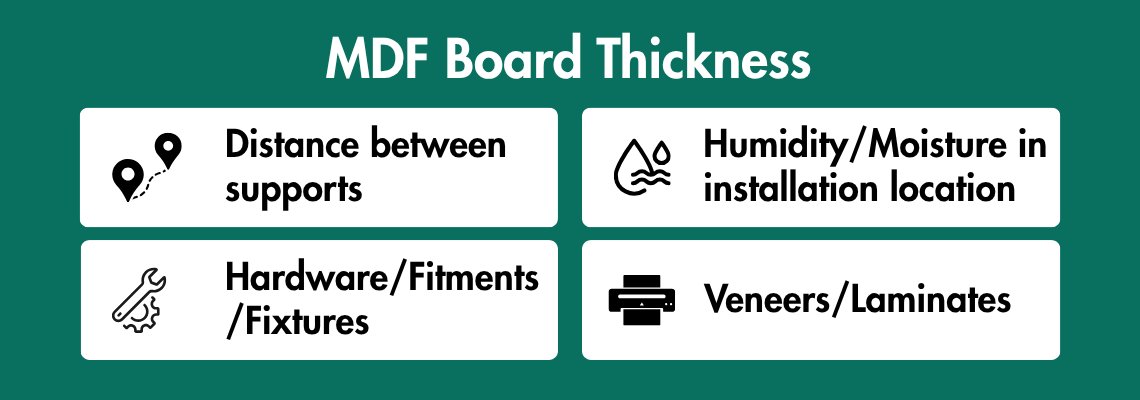
Factors that influence the right thickness:
Type of applications (shelving vs. decorative panels)
- Distance between supports
- Humidity/Moisture in installation location
- Hardware/Fitments/Fixtures
- Veneers/Laminates
Common Panel Thicknesses and Their Best Applications
6mm & 9mm
Decorative applications and backing panels, drawer bottoms.
12mm & 18mm
Standard shelving and shutter door and cabinet door frames.
25mm & greater
Shelving and table tops.
Impact of Manufacturing Quality on Performance of Panels
Boards of the same thickness have different behaviors. It has been observed that factors such as consistency of density, resistance to moisture, and bonding of the core influence the ability of a panel to hold screws, and how it stays flat and how it performs in the long run. Boards manufactured with equipment that has precision and a constant density profile are likely to have a uniform strength and thickness range, and be used when manufacturing under high precision.
Tips for Carpenters and Do-It-Yourselfers
- Thickness of panels you choose should be the same as the length you wish to span in order to prevent sagging in the middle.
- Use moisture resistant grades for the kitchen, bathrooms, and humid areas.
- Check screw capacity before you finalize your hardware placement.
- Always laminate to the thickness you wish the final panel to be.
- Mistakes to Avoid When Selecting Panels
- Thinking that the thickness of a board is a good indication of the board being strong enough for any application.
- Ignoring the potential for moisture to come into contact with grade standard boards.
- Failing to consider the thickness of the board in relation to edge band.
- Buying boards solely based on price without knowing the consistency of density.
Conclusion
Choosing the right panel is dependent upon your project’s requirements and finishing as well as the environment. Getting the MDF board thickness right is important.