
Medium Density Fibreboard (MDF) is popular in custom furniture making because it’s easy to work with and has a tidy finish. MDF boards have a solid middle layer with outer and inner layers. The solid outer layer is more porous than the solid inner layer. Due to their porosity, edge layers are often likely to peel or have cracks, or worse, are likely to split when screws are plied. Since the MDF inner layer is the least dense, it is sensitive to both internal and environmental damp. This makes the edges most sensitive. A MDF product can be made as good as or appearing more expensive than standard solid boards through strategic assembly and finishing techniques.
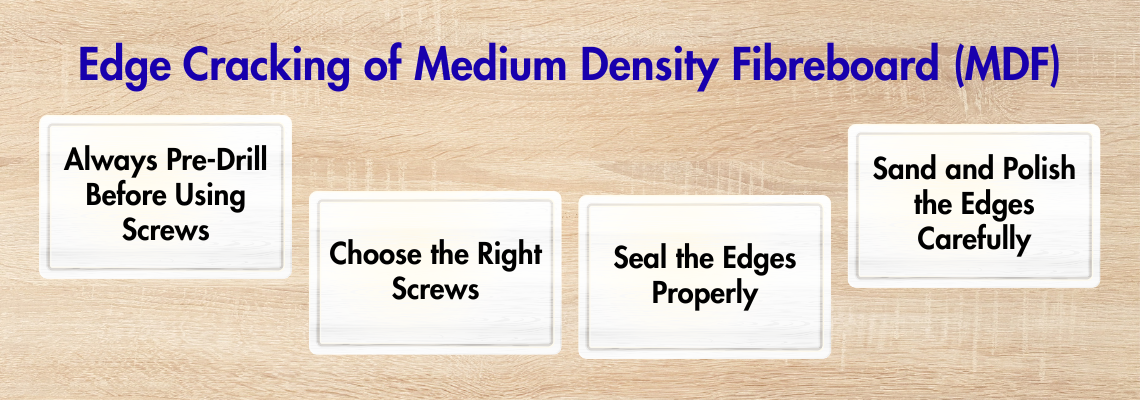
Ways to Prevent Cracking at the Edges of Medium Density Fibreboard (MDF)
1.Always Pre-Drill Before Using Screws
Driving screws directly into MDFcan easily split or crack the edges. Unlike natural wood, MDF does not have a grain structure that can absorb pressure effectively. When a screw is forced into the board without preparation, it pushes the fibres apart and weakens the material.
To avoid this issue, it is important to pre-drill pilot holes before inserting screws. Choose a drill bit slightly smaller than the screw diameter so the screw can fit securely without creating excess pressure. Pre-drilling creates a smooth path for the screw and helps maintain the strength of the board.
2.Choose the Right Screws for Medium Density Fibreboard(MDF)
Using standard wood screws on MDF may not give the best results. Regular screws are often too thick and can place too much stress on the board edges, leading to cracks or splits.
A better option is to use screws specifically designed for MDF or fiberglass applications. These screws are thinner, sharper, and more tapered, allowing them to cut through the material more smoothly. Because they apply less force during installation, they reduce the chances of edge damage and improve overall holding strength.
3.Seal the Edges Properly
MDF edges tend to absorb paint, primer, and moisture more quickly than the surface area. This can cause the fibres to swell and create tiny cracks after finishing.
To prevent this, seal the edges before painting. A simple mixture of wood glue and water works well for filling the porous fibres. Apply the mixture evenly, allow it to dry completely, and then sand the surface smooth. Proper edge sealing creates a stronger finish, reduces paint absorption, and helps prevent cracking over time.
4.Sand and Polish the Edges Carefully
Rough or poorly finished edges can weaken MDF and increase the risk of chips and cracks during handling or painting. Proper sanding is essential for creating a smooth and durable edge.
Start with a medium-grit sandpaper and gradually move to finer grits such as 220 or 320. Incremental sanding removes loose fibres and creates a polished surface that is less likely to break. Finishing the edges carefully also improves paint adhesion and gives the MDF a cleaner, professional appearance.
Preventing edge cracking of Medium Density Fibreboard(MDF) is an important key to both the quality and durability of the finished product. With high quality screws, protected surfaces to avoid splinters, pre-drilled holes, smooth sealed edges, and finished surfaces, cracking and warping of MDF can be practically eliminated. Proper preparation of the material prior to assembly creates sturdy wooden furnishings that appearance is as premium as the most expensive solid wood.