
Thickness
2.2–35 mm
Finishes
Suede / Matt
Sheet Size
8*4
Applications
Furniture, Cabinetry
Quality Engineered Wood Panels
If you’re comparing MDF board suppliers in India for an upcoming furniture, cabinetry, or interior fit-out order, this page covers what you actually need before you place that order: what MDF is, how Xylosuisse manufactures it, the specifications you should be checking, and how it stacks up against particle board and plywood for your specific application.
What Is MDF Board?
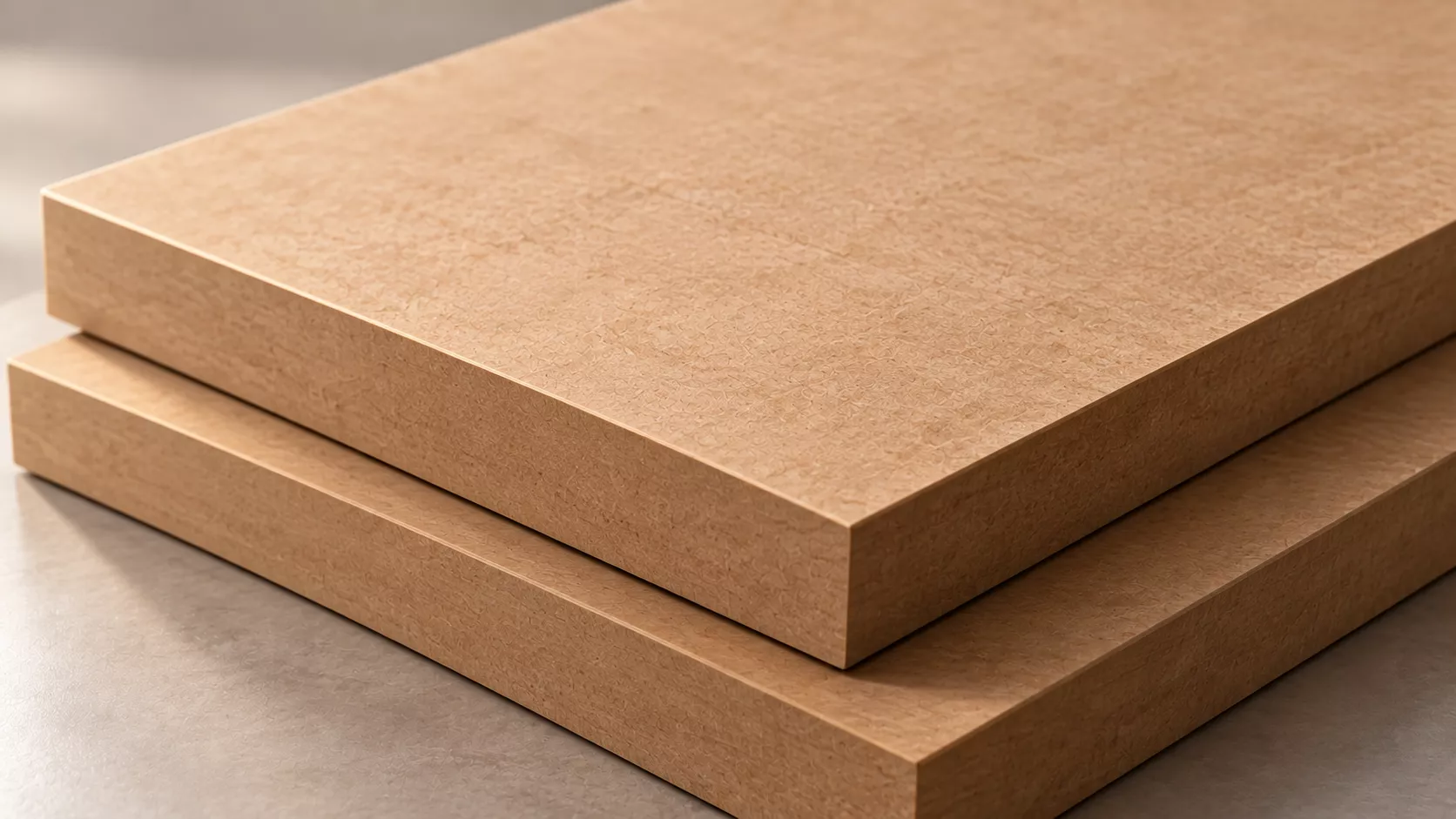
MDF — medium-density fibreboard — is an engineered wood panel made by breaking down softwood and hardwood residuals into fine wood fibres, then binding those fibres with resin under heat and pressure into a single, dense, uniform panel. Unlike plywood, which is built from layered sheets of wood veneer, or particle board, which uses coarser wood chips and particles, MDF has no visible grain, layers, or particle texture at all — the fibre structure is consistent all the way through the panel, edge to edge and face to face.
That homogeneous structure is what makes MDF genuinely different to work with. Because there’s no grain direction and no particle “chunkiness” at the surface, it machines, routs, and edge-profiles cleanly, and takes paint, laminate, and veneer without the surface telegraphing through the finish the way particle board sometimes can.
At Xylosuisse, MDF is manufactured on Dieffenbacher press lines — the same German engineering standard used across our panel range — with wood fibres processed and bonded under tightly controlled temperature and pressure to hold density consistent across every sheet, not just the sample batch. In India, general-purpose MDF is manufactured to IS 12406, the Bureau of Indian Standards specification that sets out thickness, density, moisture content, and internal bond strength requirements across two board grades.
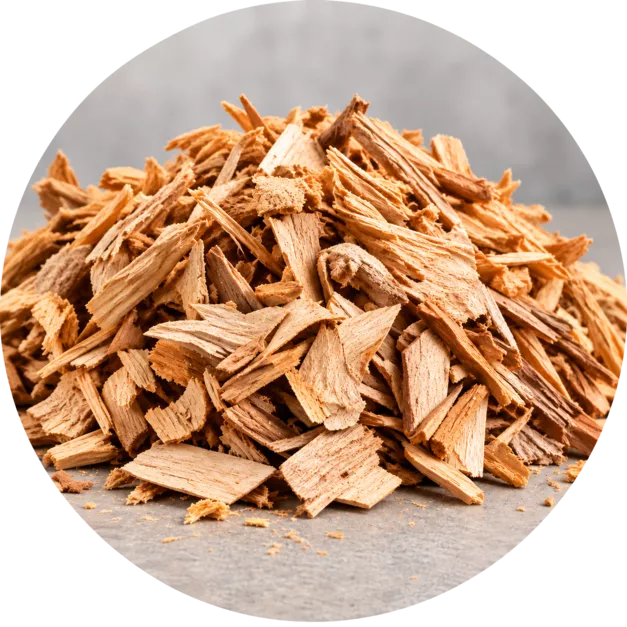
From Wood Residuals to MDF Panel

Wood Residuals
Softwood and hardwood residuals
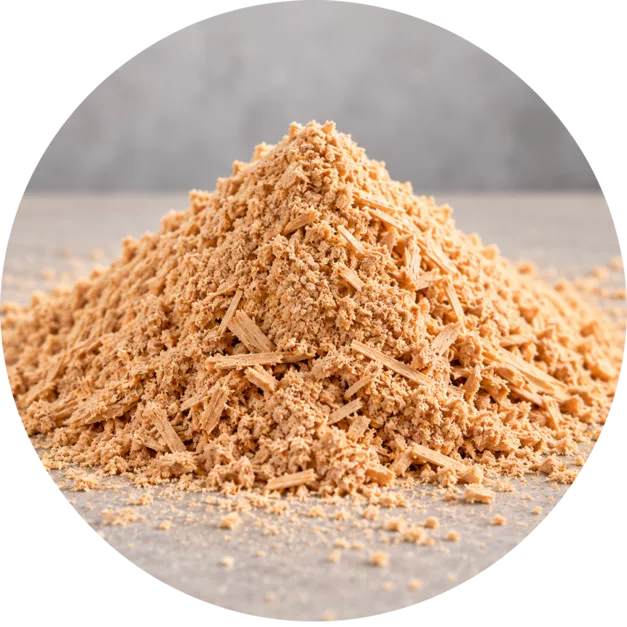
Fine Wood Fibres
Breaking down softwood & hardwood residuals into fine wood fibres.
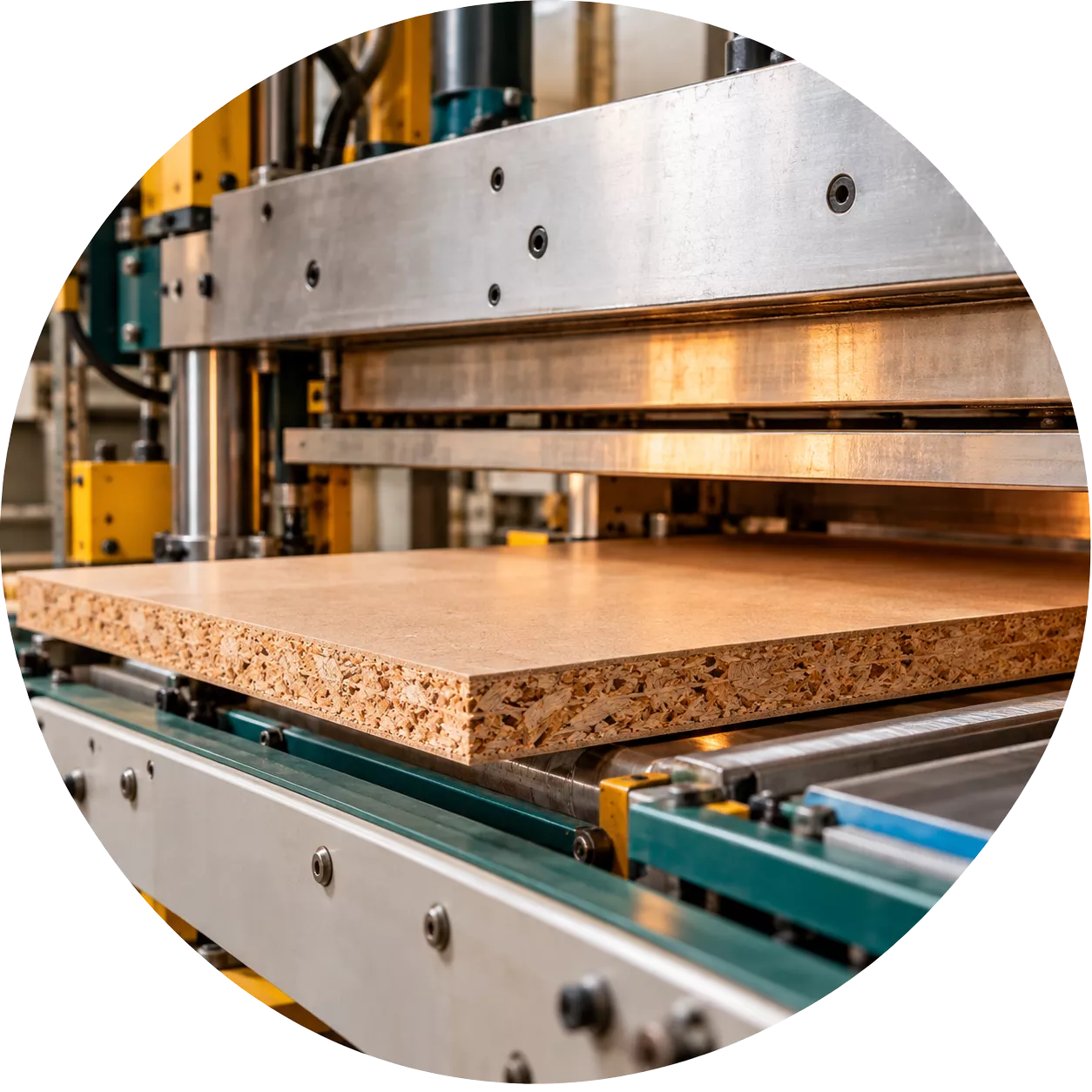
Resin + Heat & Pressure
Binding those fibres with resin under heat & pressure
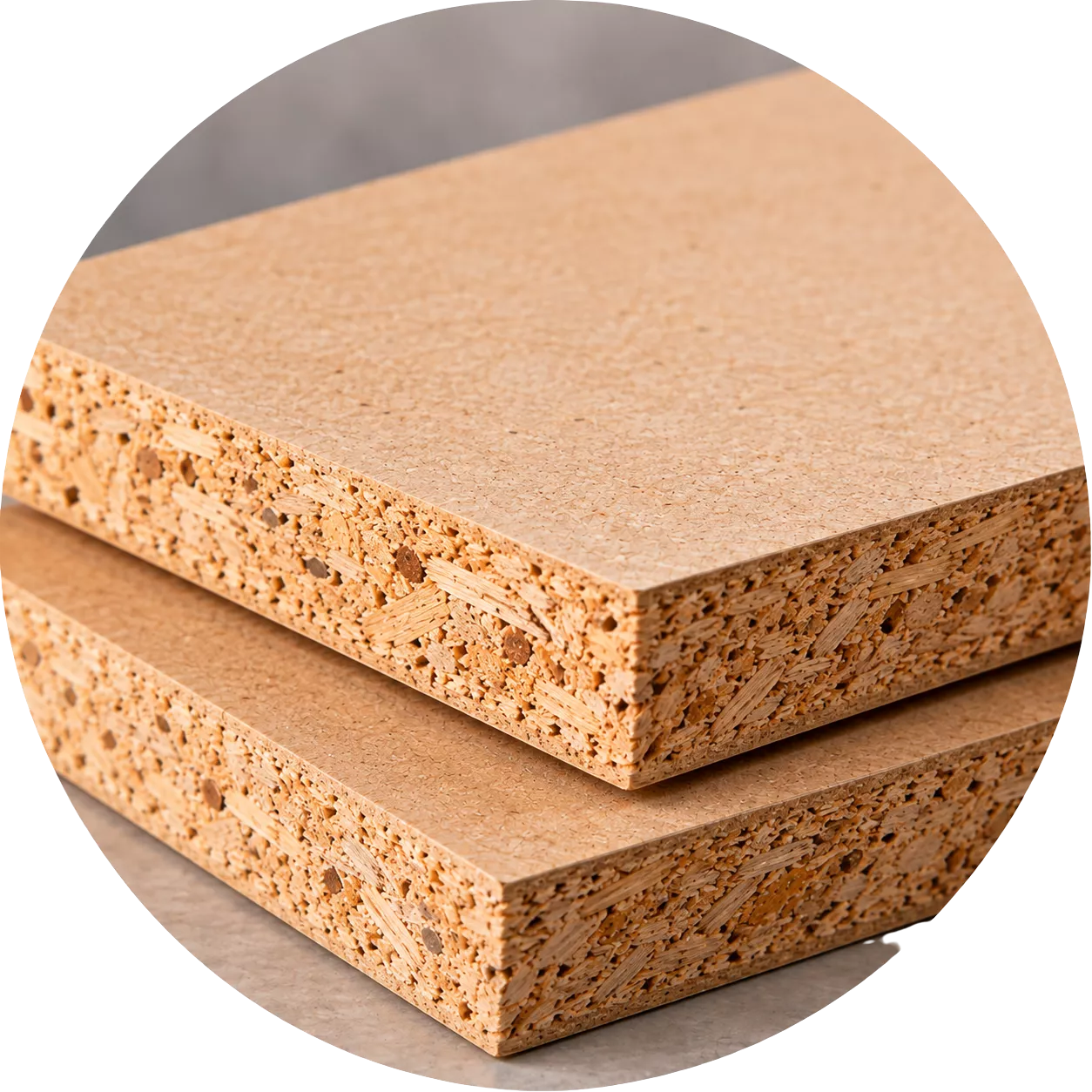
Uniform Panel
A single , dense, uniform panel.
Key Features
Smooth, Uniform Finish
No grain, knots, or particle texture at the surface means paint, laminate, and veneer all sit flush and consistent — there's nothing underneath to telegraph through the top coat, even on large, flat furniture panels.
High Machinability
The fine, uniform fibre structure is what makes MDF the material of choice for detailed edge profiling, routing, and CNC/laser-cut work — it cuts cleanly without chipping or splintering the way layered or particle-based panels can at fine detail.
Consistent Quality, Sheet to Sheet
Because density is controlled through the pressing process rather than depending on raw material size or grain, one sheet performs the same as the next — which matters enormously once you're specifying panels across a production run rather than a single piece.
Applications

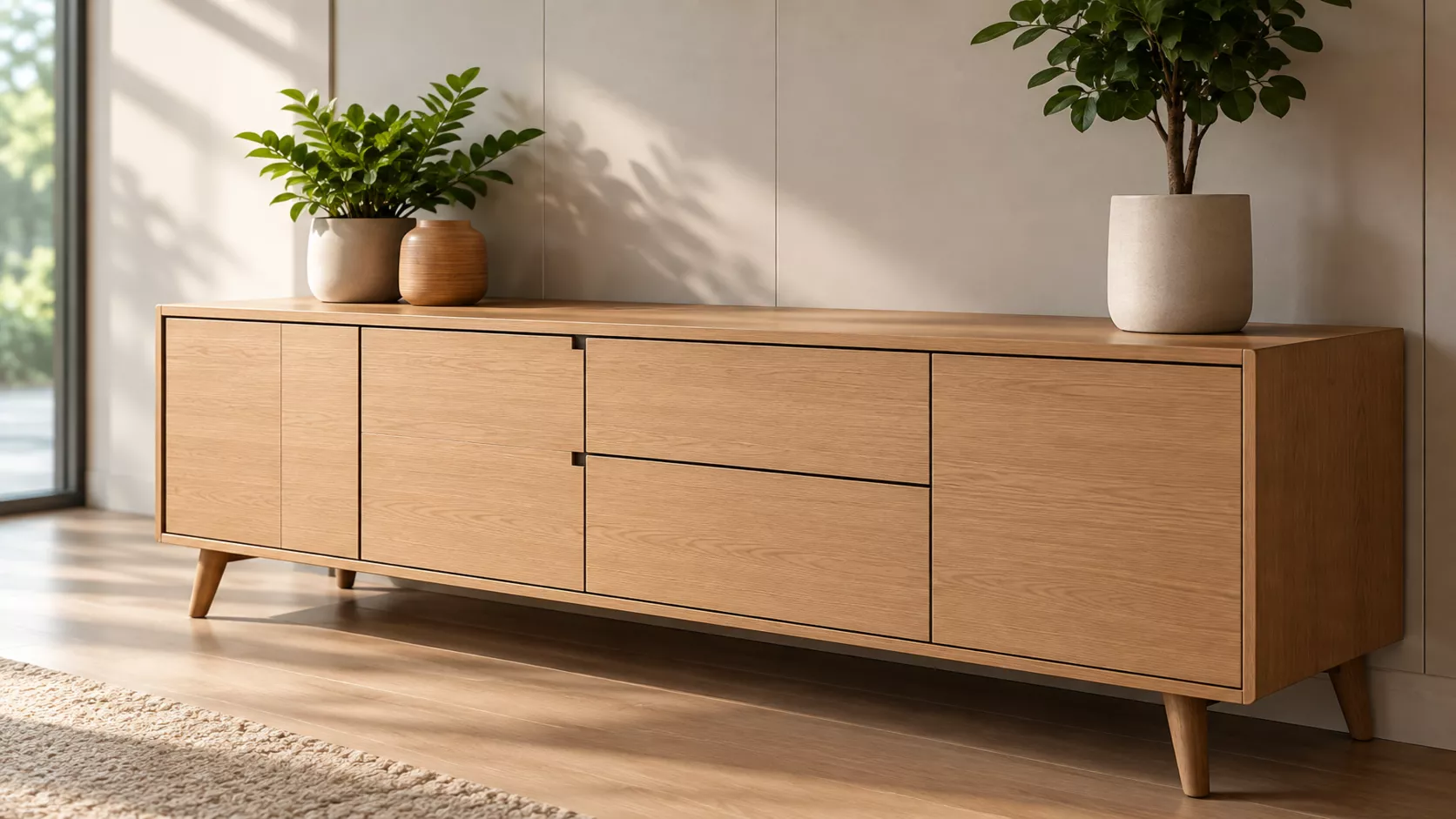
Furniture
Plain MDF board for furniture is widely used for cabinet doors, shelving, and flat-panel furniture components, especially where a painted or laminated finish is planned
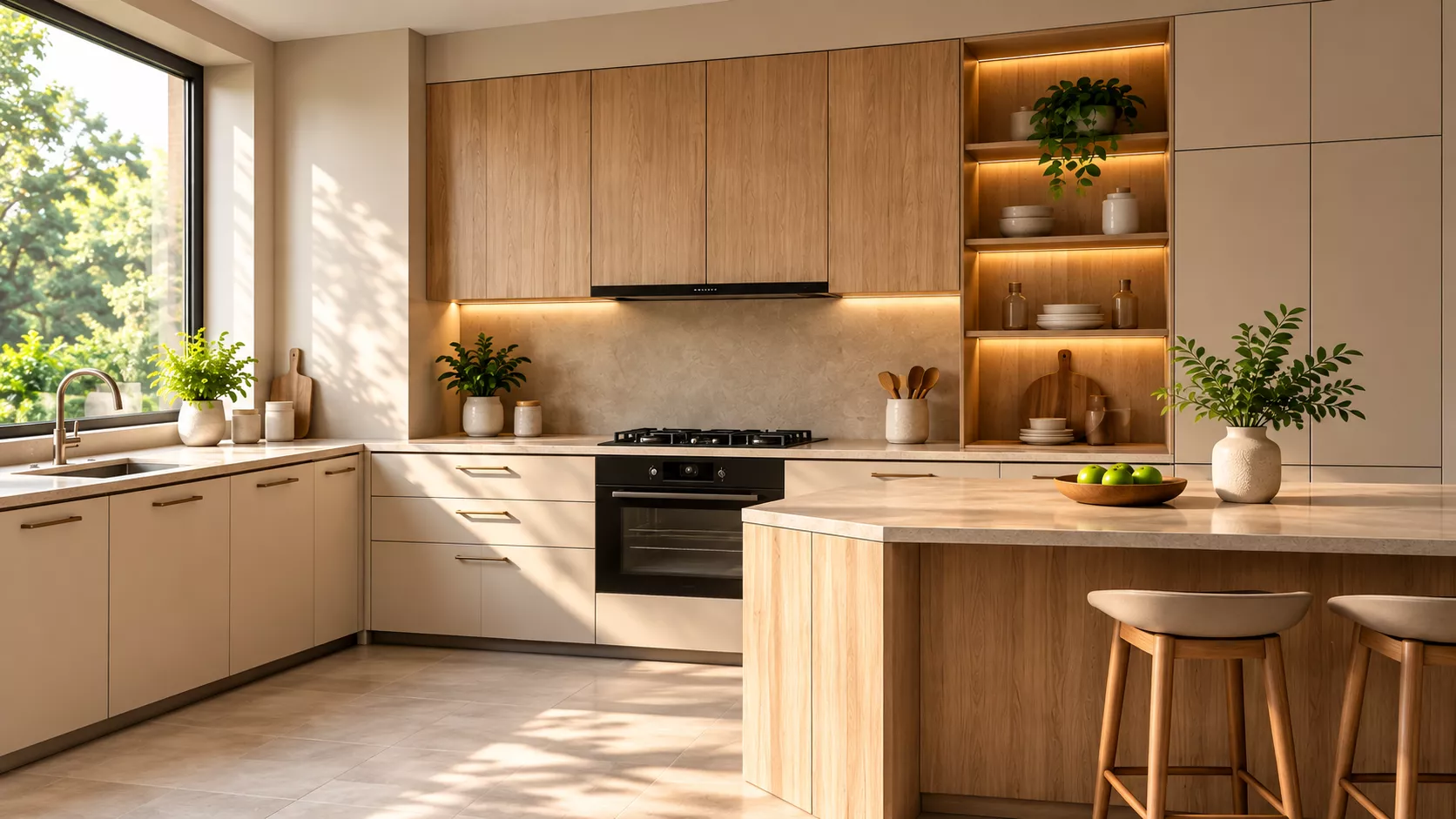
Cabinetry
Kitchen and wardrobe carcass and shutter construction, where dimensional stability and screw-holding strength both matter.
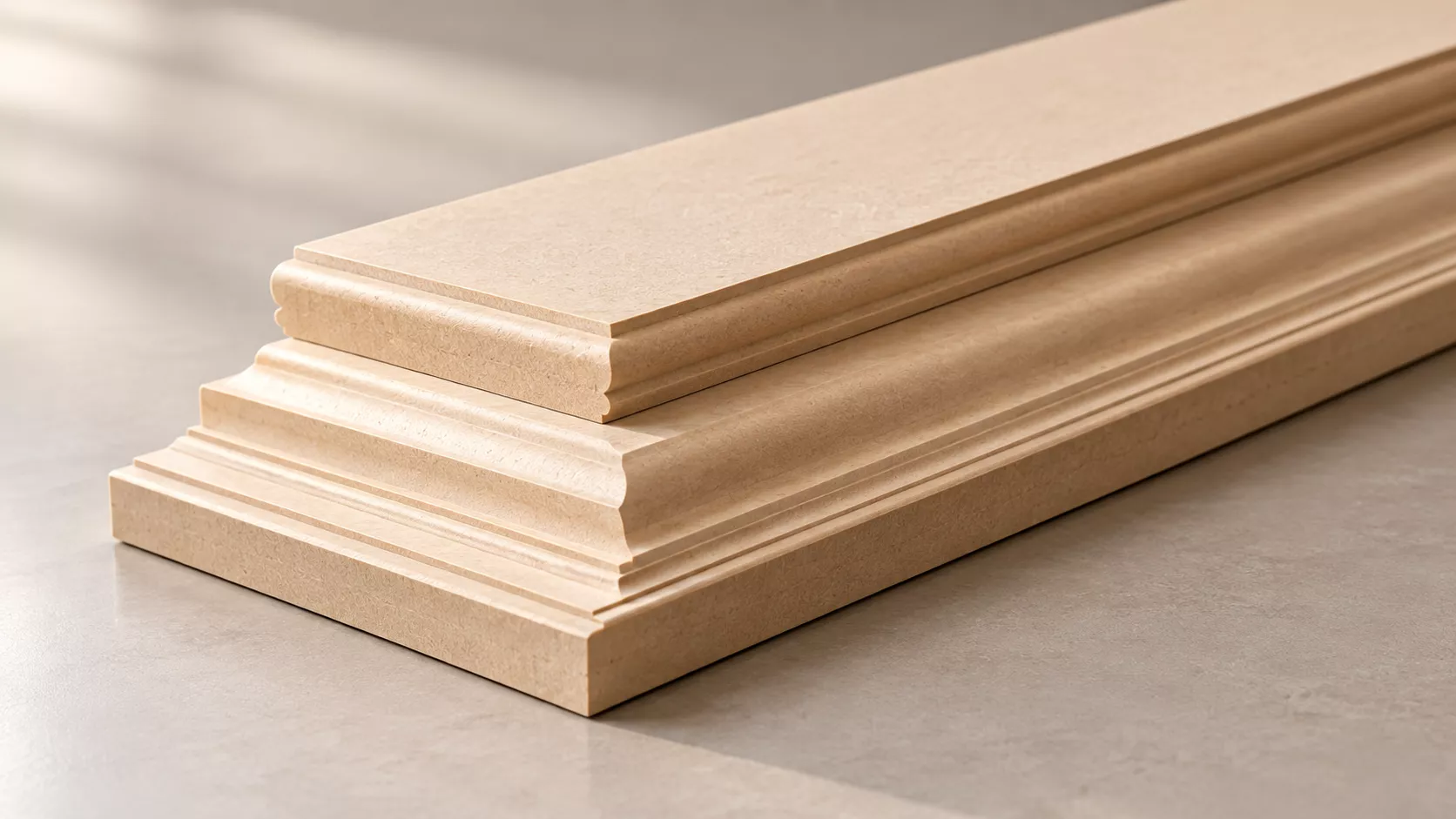
Moulding & Trims
Skirting boards, architraves, and decorative profiles, where MDF's fine, splinter-free machining is a genuine advantage over solid wood or particle board
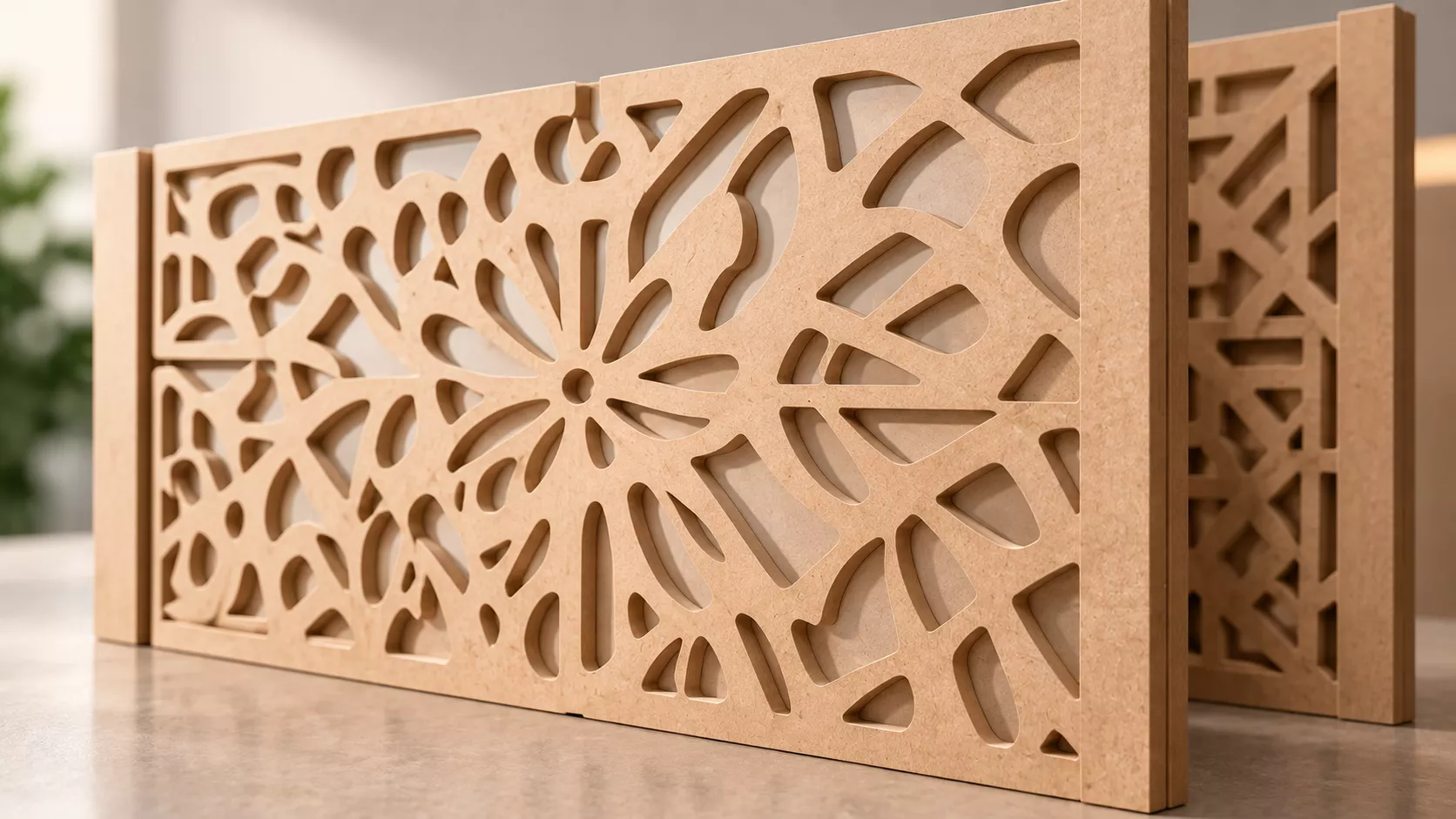
Laser-Cut / CNC Work
Intricate jali (lattice) panels, decorative screens, and detailed routed designs rely on MDF's uniform density to cut cleanly at fine tolerances
Veneering Base
A flat, stable substrate for natural wood veneer, giving the visual warmth of solid timber over a more dimensionally stable core
MDF vs Particle Board vs Plywood
A quick, honest comparison — because the right board depends on the job, not on which one sounds Premium :
| Parameter | MDF | Particle Board | Plywood |
|---|---|---|---|
| Structure | Fine, bonded wood fibres — no visible grain | Coarser wood chips/particles bonded together | Layered wood veneer sheets, cross-grained |
| Surface finish | Smooth, uniform | Slightly coarser surface, laminate/veneer typically used | Natural wood grain, can be stained or veneered |
| Machinability | Excellent — cleanest for routing, CNC, fine detail | Moderate — can chip at fine edges | Good, but grain direction affects cutting |
| Screw-holding strength | Good, especially at panel face | Lower than MDF at edges | Strong, especially with cross-ply construction |
| Moisture tolerance | Standard grade is not moisture-resistant; MR/exterior grade available | Standard grade is not moisture-resistant; MR grade available | Naturally better moisture tolerance, especially marine-grade |
| Typical cost position | Mid-range | Most economical | Generally the highest of the three |
| Best suited for | Painted furniture, mouldings, CNC/laser-cut panels, veneering base | Cost-sensitive modular furniture, wardrobe carcasses | Structural applications, load-bearing furniture, higher-moisture areas |
Why Choose Xylosuisse's MDF Boards
Manufacturing Consistency
Dieffenbacher press-line technology holds density and thickness tolerance tight across every production run, not just the showroom sample, which matters once you’re ordering at volume for a production schedule.
Machinability Advantage
Our MDF is processed for the fine, uniform fibre structure that CNC, routing, and profiling work depends on, so fabricators get clean edges and detail without excess tool wear or rework.
Supply Reliability
Backed by a 60-year family-owned manufacturing legacy and Xylosuisse’s position as the Indian subsidiary of the Geneva-based Xylonetics group, with a state-of-the-art unit built specifically to support consistent, scalable supply to India’s furniture and interiors market — not a one-off import-dependent batch.
Standards-Based Quality
Boards manufactured to IS 12406, with grade and specification documentation available on request, so procurement and quality teams aren’t taking finish quality on faith.
Frequently Asked Questions
It depends on the furniture piece, not a blanket "better." MDF is the stronger choice where you need a perfectly smooth, paint-ready surface, fine routed detailing, or a stable veneering base — cabinet doors, moulded profiles, and CNC-cut panels, for example. Plywood generally has the edge for load-bearing furniture and higher-moisture areas, thanks to its cross-grained layered construction. Many furniture pieces use both — plywood for structural carcasses, MDF for doors, shutters, and detailed components
Yes — this is one of MDF's core strengths. Its smooth, grain-free surface takes paint evenly without the grain or knots showing through, which is why it's the preferred substrate for painted furniture and moulded trim. For the best finish, lightly sand the surface, seal any cut or routed edges (which are more porous than the face), and use a primer suited to engineered wood before the topcoat.
MDF board is commonly available in 3mm, 6mm, 9mm, 12mm, 16mm, 18mm, and 25mm thicknesses, with thinner options (down to around 2mm) used for moulding and lamination-base applications. The right thickness depends on the application — thinner boards for panelling and moulding, 12–18mm for most furniture and cabinetry, and thicker boards for larger unsupported panels or heavier-duty applications. Confirm exact stock availability for your required thickness with our sales team.
Xylosuisse manufactures and supplies MDF board to furniture manufacturers, modular kitchen and wardrobe fabricators, and interior contractors across India, with supply backed by our own manufacturing facility rather than third-party trading stock. Reach out to our team for current thickness availability, grade options, and sheet pricing for your order volume.