
Thickness
2.2–35 mm
Finishes
Suede / Matt
Sheet Size
8*4
Applications
Furniture & Interiors
Consistency That Builds Better Furniture
Reliable MDF Board for Modern Interiors
If you’re evaluating HDF board suppliers in India for a flooring, wall panelling, or high-traffic commercial fit-out project, this page covers what actually matters before you order: what HDF is, how it differs from MDF, the density and thickness specifications to check, and where it genuinely outperforms lighter engineered wood panels.
What Is HDF Board?
HDF — high-density fibreboard — is an engineered wood panel made the same basic way as MDF: wood fibres are broken down, bonded with resin, and pressed under heat and pressure into a single uniform panel. What sets HDF apart is exactly what its name says — density. HDF is pressed to a significantly higher density than MDF, which is what gives it the added rigidity, impact resistance, and load-bearing capability that standard MDF and particle board can’t match.
In practical terms: under Indian standards, hardboard/HDF-grade fibreboard is classified above roughly 800 kg/m³ density (per IS 1658 and IS 7638 Part 2), compared to MDF’s general-purpose density band of roughly 600–800 kg/m³ (IS 12406 / IS 7638 Part 1). That density difference isn’t just a number on a spec sheet — it’s the reason HDF is the material of choice underneath laminate flooring, behind high-traffic wall panelling, and inside door skins, where the panel needs to resist impact, indentation, and repeated loading in ways a lighter board simply isn’t built for.
Xylosuisse manufactures its board range — MDF, HDF, and particle board alike — on Dieffenbacher press lines, with density and thickness held to tight tolerance through the pressing process itself, not adjusted after the fact. For HDF specifically, that consistency matters more than on any other panel type, because density is the entire basis of the product’s performance claim.
From Fibre to a High-Density Panel

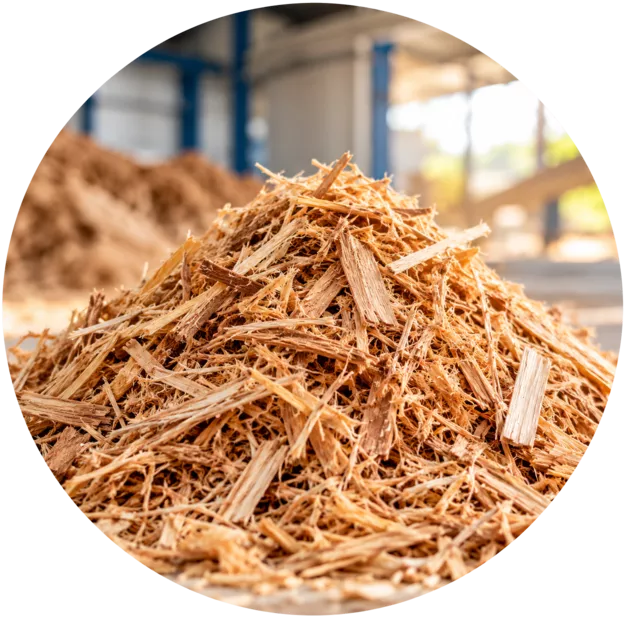
Wood Fibres
Wood fibres are broken down.

Resin
Bonded with resin.
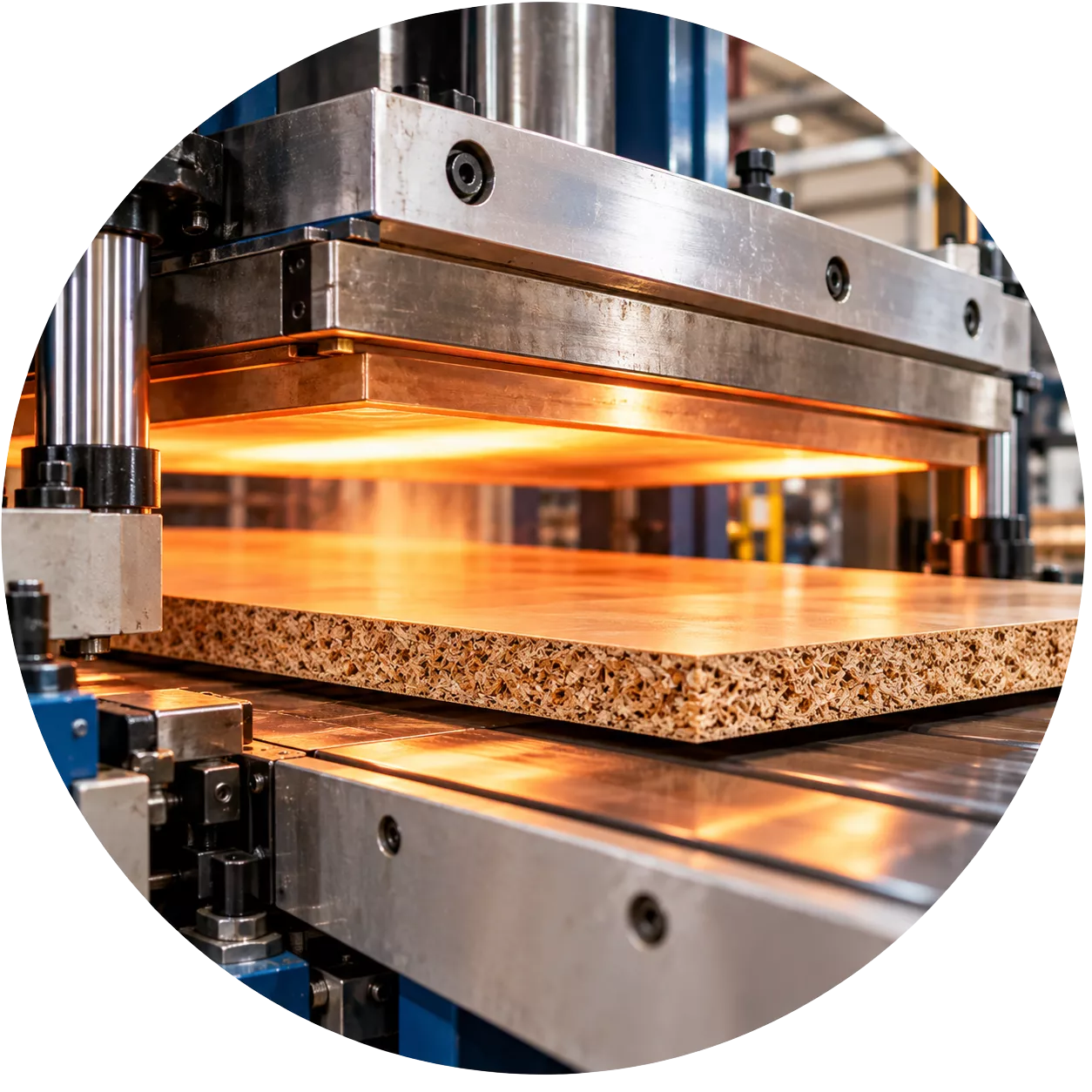
Heat & Pressure
Pressed under heat and pressure.
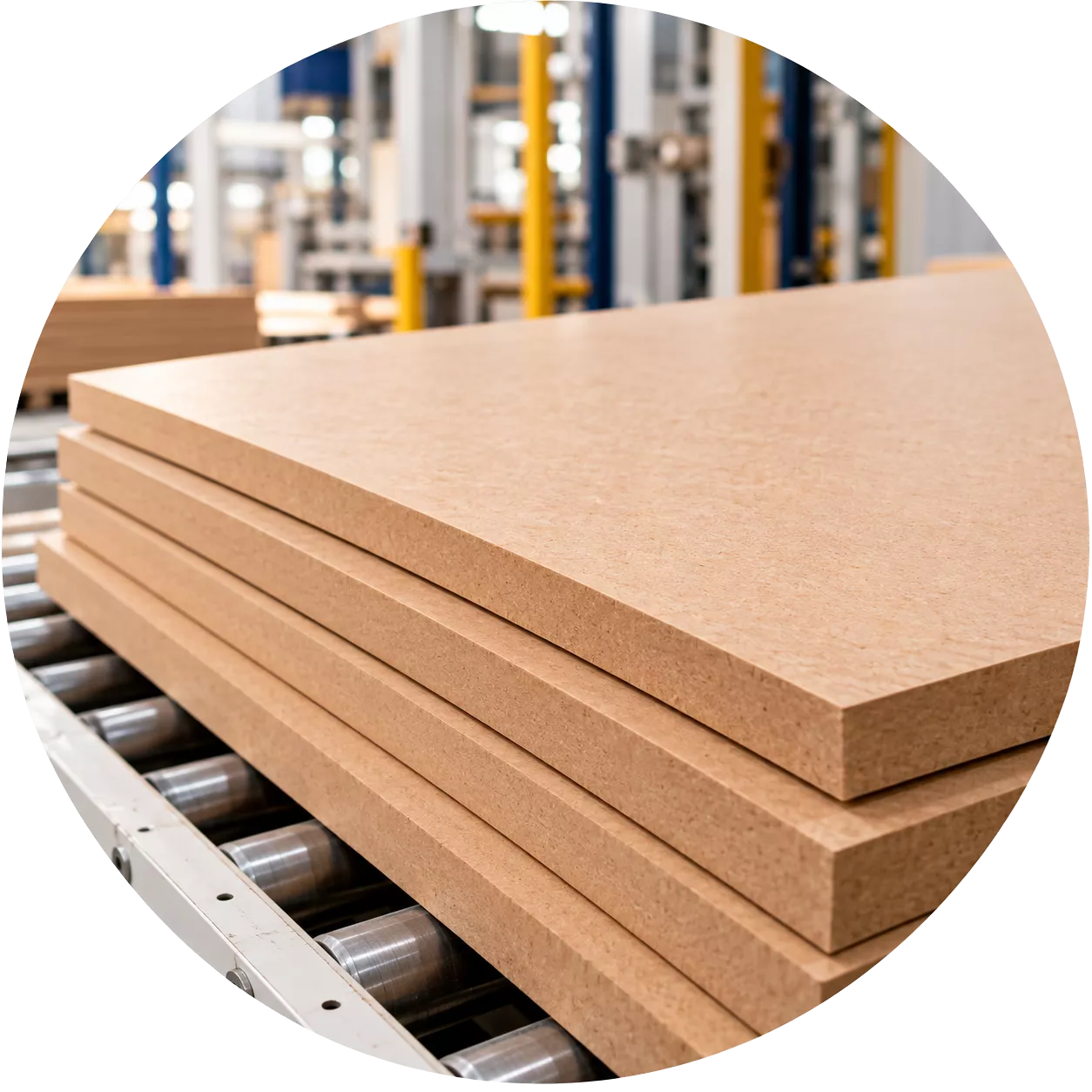
Uniform Panel
Single uniform panel of HDF.
Key Features
Enhanced Durability
The higher fibre density gives HDF meaningfully better resistance to impact, indentation, and surface wear than MDF or particle board — which is exactly why it's the standard core material for laminate flooring and the preferred substrate for high-traffic wall panelling.
Ideal for Heavy-Duty Use
Where a panel needs to carry repeated foot traffic, resist knocks in a commercial fit-out, or sit under structural load as a door-skin core, HDF's density gives it a strength-to-thickness ratio that lighter boards can't replicate — you get more structural performance out of a thinner panel.
Excellent Screw & Fastener Holding
Density translates directly into fastener-holding strength — HDF grips screws and fittings more securely than particle board at comparable thickness, which matters in cabinetry backs, drawer bases, and structural components that see repeated stress.
Smooth, Consistent Surface
Like MDF, HDF's fine fibre structure gives it a smooth, grain-free surface — but at higher density, that surface is also harder and more resistant to surface damage, which is why it's frequently used unfinished as a functional back-panel or underlayment material as well as a decorative substrate.
Applications

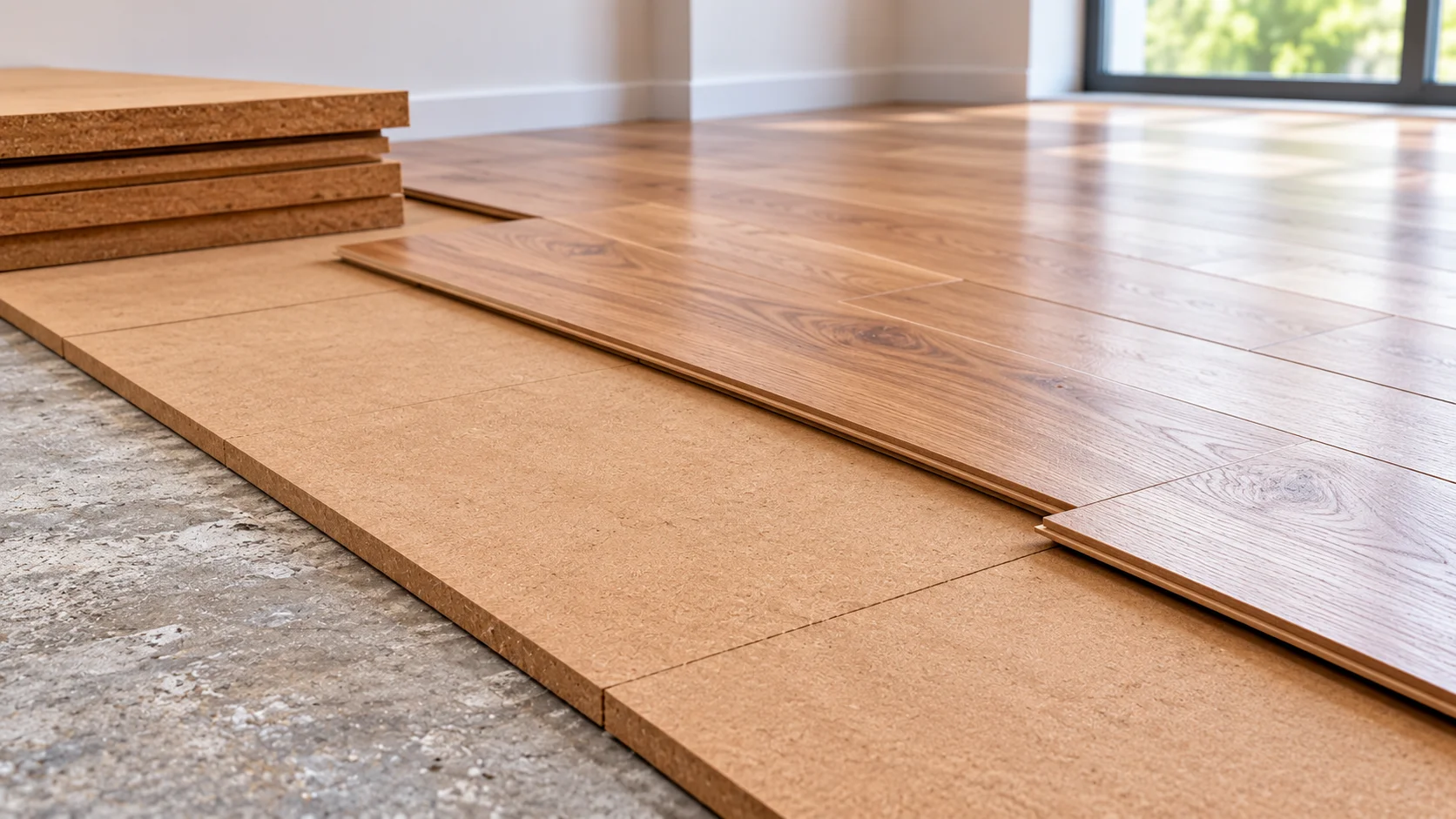
Flooring Underlay
high density fiberboard for flooring is the standard core and underlayment material beneath laminate and engineered wood flooring, where its rigidity and impact resistance directly determine how the finished floor performs underfoot.
Wall Panels
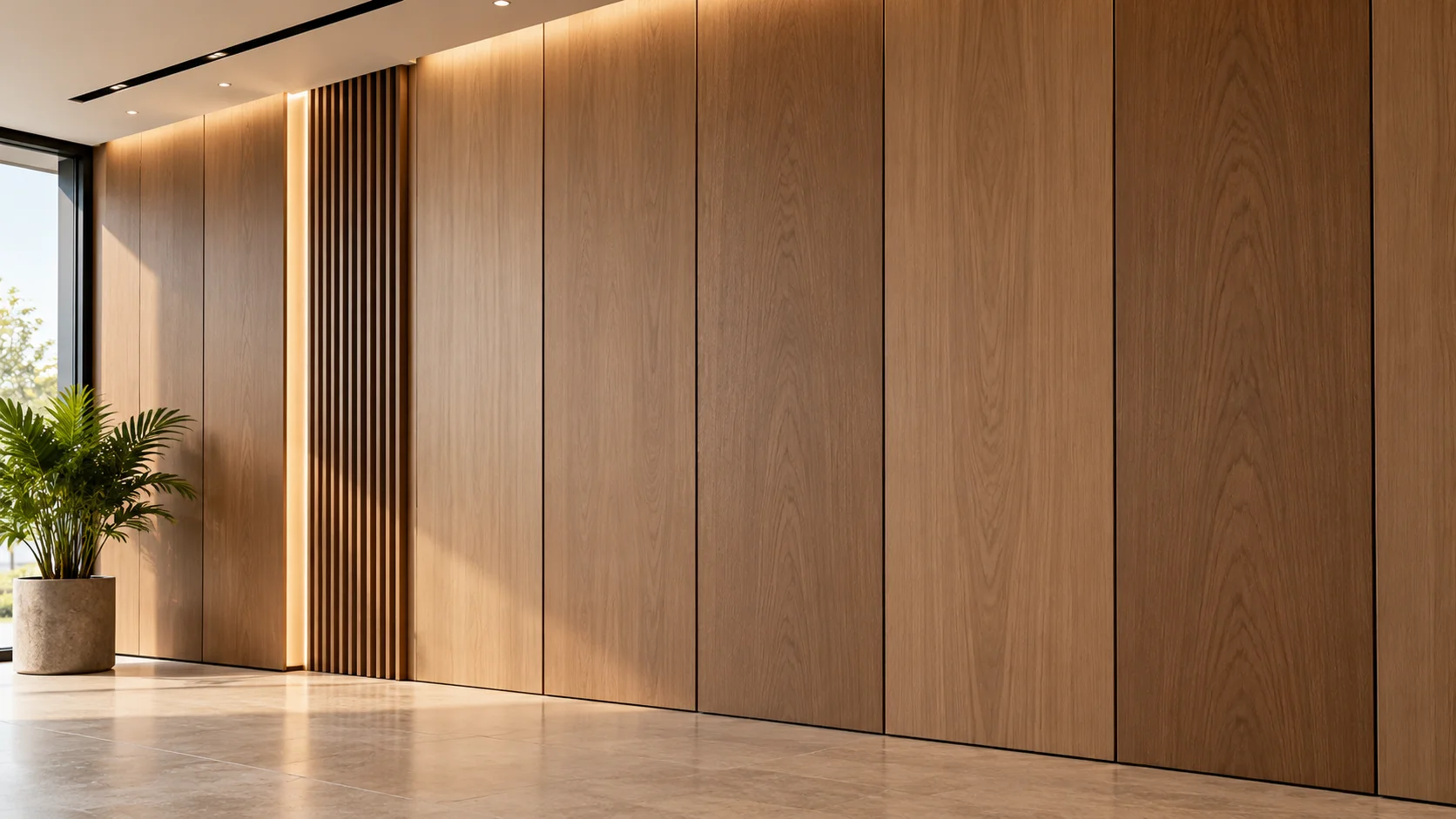
HDF board for wall panels is widely specified for high-traffic corridors, retail interiors, and commercial spaces where standard MDF or particle board would show wear faster.
Door Skins
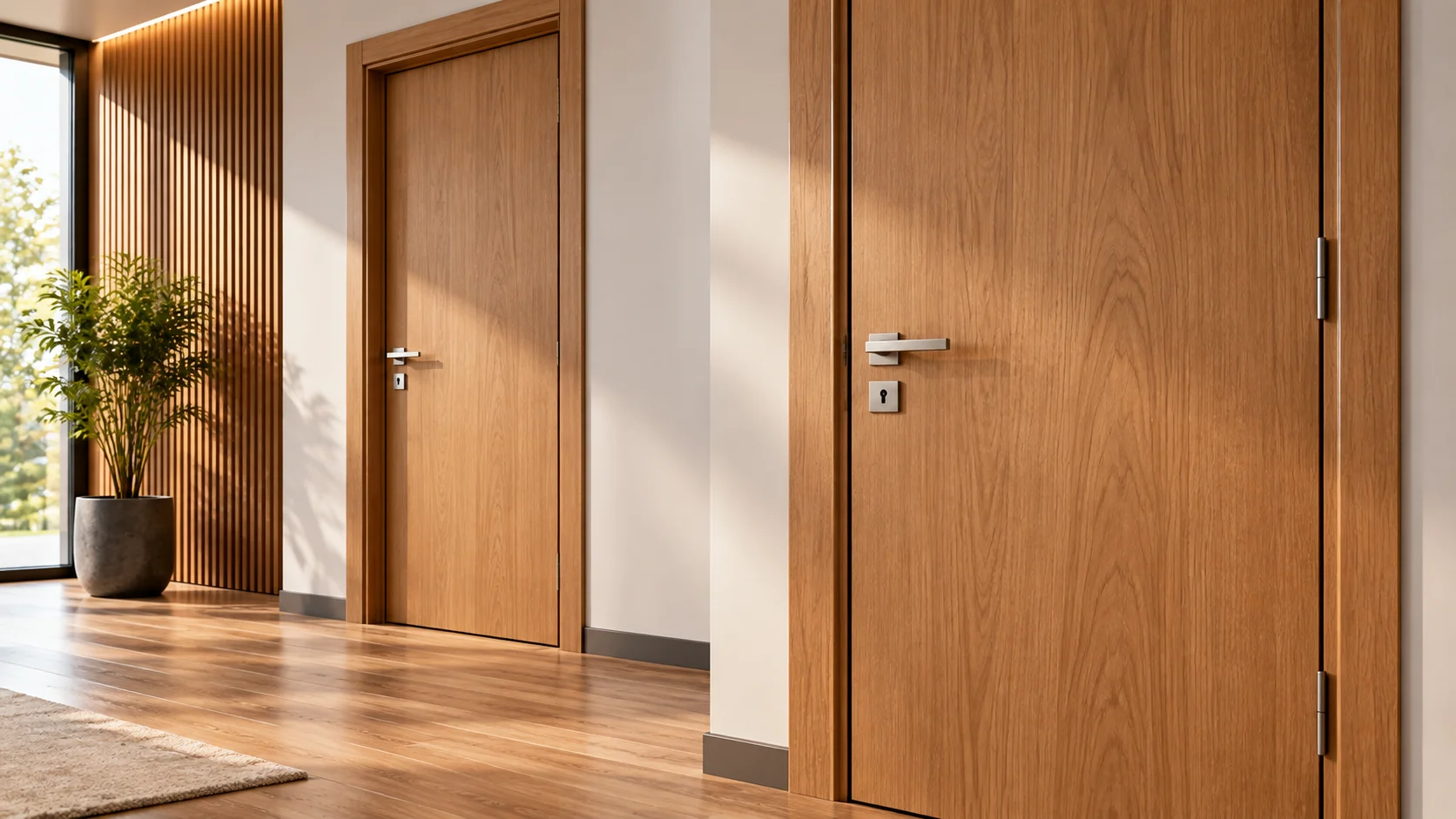
the thin, dense, smooth-surfaced HDF sheet used as the outer face of moulded and flush door panels, where surface hardness and consistent thickness both matter for the moulding process.
Retail & Commercial Fit-Outs
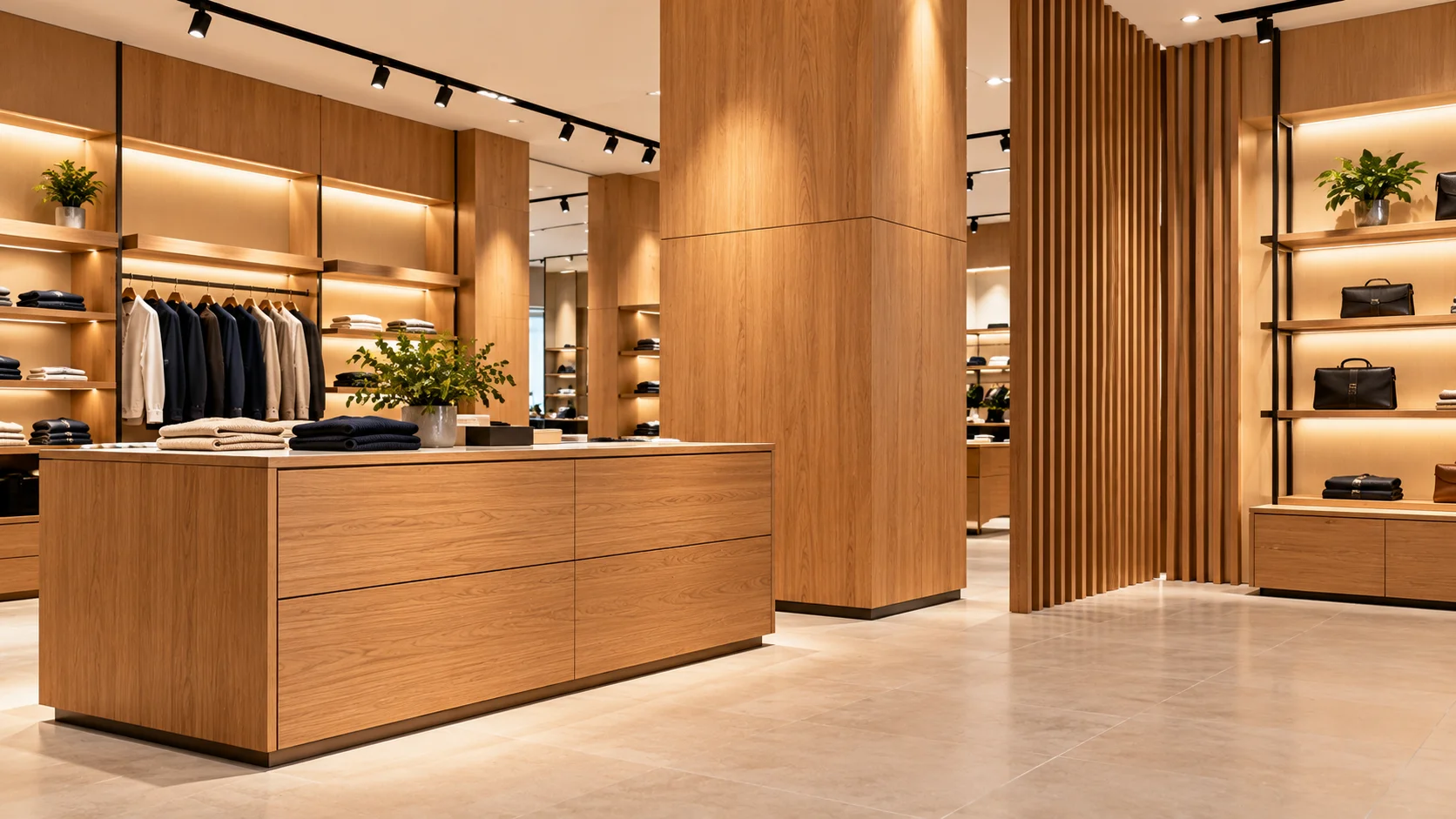
display fixtures, shopfitting panels, and store furniture that need to withstand repeated handling and higher footfall than a residential interior.
High-Traffic Areas
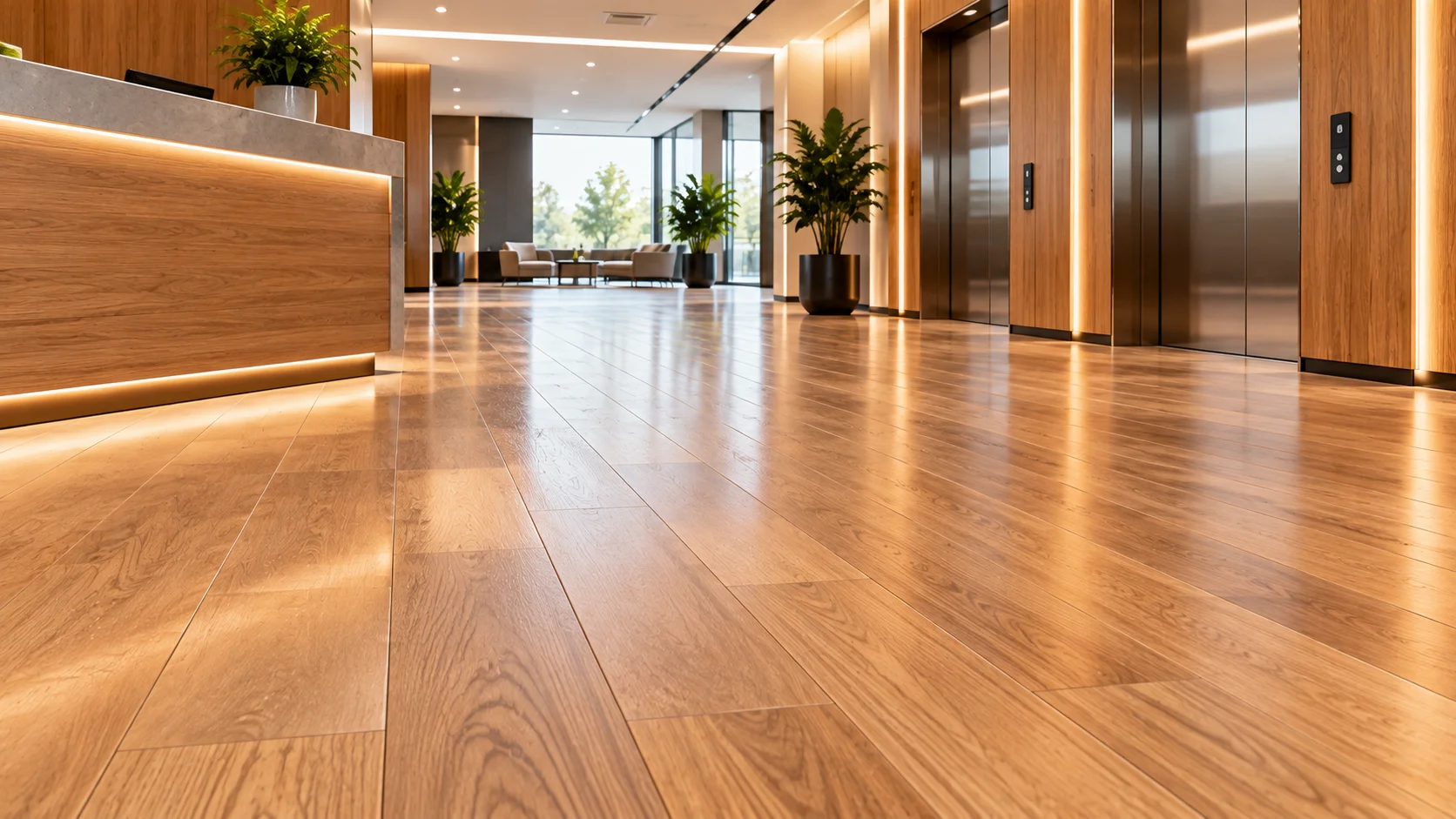
anywhere a panel is subject to repeated impact or load — corridors, commercial partitions, and back-panels in heavily used cabinetry — HDF's density gives it a genuine durability edge.
HDF vs MDF - What's the difference
| Parameter | HDF | MDF |
|---|---|---|
| Density | High – roughly above 800 kg/m³ | Medium – roughly 600 – 800 kg/m³ |
| Strength & impact resistance | Higher – built for load and repeated impact | Good, but not built for heavy-duty structural use |
| Typical thickness | Often thinner (2.5mm – 8mm common) while still outperforming thicker MDF on strength | Wider range, commonly 3mm – 25mm |
| Machinability | Denser, so more tool wear on deep routing/detailed profiling | Easier to rout and machine in fine detail |
| Best suited for | Flooring underlay, door skins, wall panels, high-traffic and structural back-panel use | Painted furniture, mouldings, CNC/laser-cut decorative panels, veneering base |
| Typical cost position | Generally priced higher than MDF at comparable thickness, reflecting the added density and performance | Mid-range |
Not sure which panel fits your project?
Explore our MDF & Plywood products or speak with our team for expert advice.
Why Choose Xylosuisse's HDF Boards
Strength you can verify, not just claim
our HDF range is manufactured and tested against IS 1658 / IS 7638 Part 2 density and strength benchmarks, with documentation available on request rather than an unverified marketing claim.
Manufacturing consistency
Dieffenbacher press-line technology holds density tolerance tight across every production run, which is the single most important consistency factor for a density-driven product like HDF.
Industrial-grade reliability at scale
backed by Xylosuisse’s state-of-the-art manufacturing unit and the 60-year manufacturing legacy of the Geneva-based Xylonetics group, built specifically to support consistent, scalable supply to India’s furniture, flooring, and commercial interiors market.
Standards-based quality documentation
grade, density, and specification data available on request, so procurement and technical teams can specify with confidence rather than relying on a sample sheet.
Frequently Asked Questions
Yes — HDF is denser than MDF, and that added density is what gives it greater strength, impact resistance, and load-bearing capability. Indian standards classify hardboard/HDF-grade fibreboard above roughly 800 kg/m³, compared to MDF's general-purpose range of roughly 600–800 kg/m³. In practice, this means HDF holds up better under repeated impact, foot traffic, and structural load, while MDF remains the easier material to rout, machine, and finish in fine detail.
Yes — high-density fiberboard is the standard core and underlayment material for laminate and engineered wood flooring. Its high density gives the finished floor the rigidity and impact resistance needed to perform under foot traffic, while its dimensional stability helps the flooring system hold up over time. It's specifically chosen for flooring applications precisely because standard MDF and particle board don't offer the same density-driven performance underfoot.
HDF board is generally classified above 800 kg/m³ under Indian standards (IS 1658 for fibre hardboards, IS 7638 Part 2), noticeably denser than MDF's typical 600–800 kg/m³ range. This higher density is the defining characteristic of HDF and the direct reason it performs better than MDF or particle board in flooring, wall-panel, and other high-load or high-traffic applications.
Xylosuisse manufactures and supplies HDF board to flooring producers, door manufacturers, commercial fit-out contractors, and furniture manufacturers across India, backed by our own manufacturing facility rather than third-party trading stock. Contact our team for current thickness and density options, and sheet pricing for your order volume.