
Prelaminated Particle Board – Ready-to-Use Engineered Wood Panel

Engineered for consistency, smooth finishes and dependable performance across furniture and interior applications.

Thickness

6–35 mm

Finishes

Suede / Matt

Sheet Size

8*4

Applications

Furniture & Interiors

Reliable Prelaminated Particle Board

Prelaminated particle board from Xylosuisse is a ready-to-use engineered wood panel that arrives at your workshop or site with its decorative surface already factory-bonded — no separate lamination, painting, or veneering needed before it goes into furniture. If you’re a carpenter, modular kitchen fabricator, architect, or wardrobe manufacturer comparing panel options, this page walks you through what the board actually is, how it’s made, where it performs best, and what it costs per sheet.

What is Prelaminated Particle Board?

Prelaminated particle board (often shortened to “prelam board” in the trade) is a plain particle board core that has a decorative, resin-impregnated paper — usually melamine — permanently pressed onto one or both faces at the factory, under controlled heat and pressure. The lamination becomes part of the board itself rather than a surface applied later, which is why the finish resists peeling, chipping, and moisture in a way that a loose laminate sheet glued on-site cannot always match.

This is the key difference from plain particle board (our core, unlaminated panel see our Particle Board page for the raw substrate specification): plain board gives you a blank engineered wood surface that still needs a laminate, veneer, or paint finish applied separately before use. Prelaminated board skips that entire step. You’re buying a panel and a finish in one product, which is exactly why fabricators increasingly specify prelam board for anything that needs to go straight to assembly — wardrobes, kitchen shutters, office desking — without a separate finishing stage in the workshop.

From Particle Board Core to a Prelaminated Panel

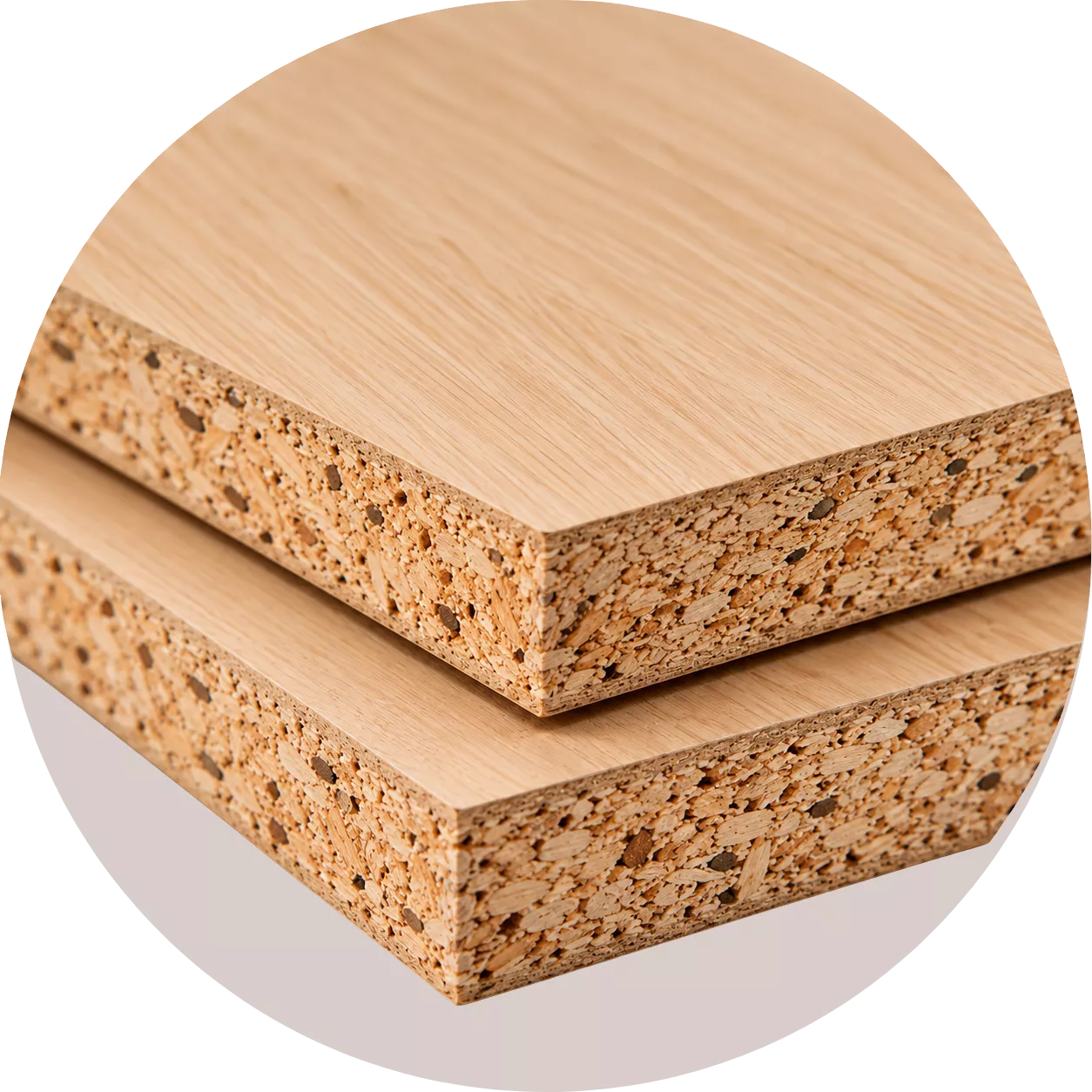
Particle Board Core

Plain particle board core as the base panel
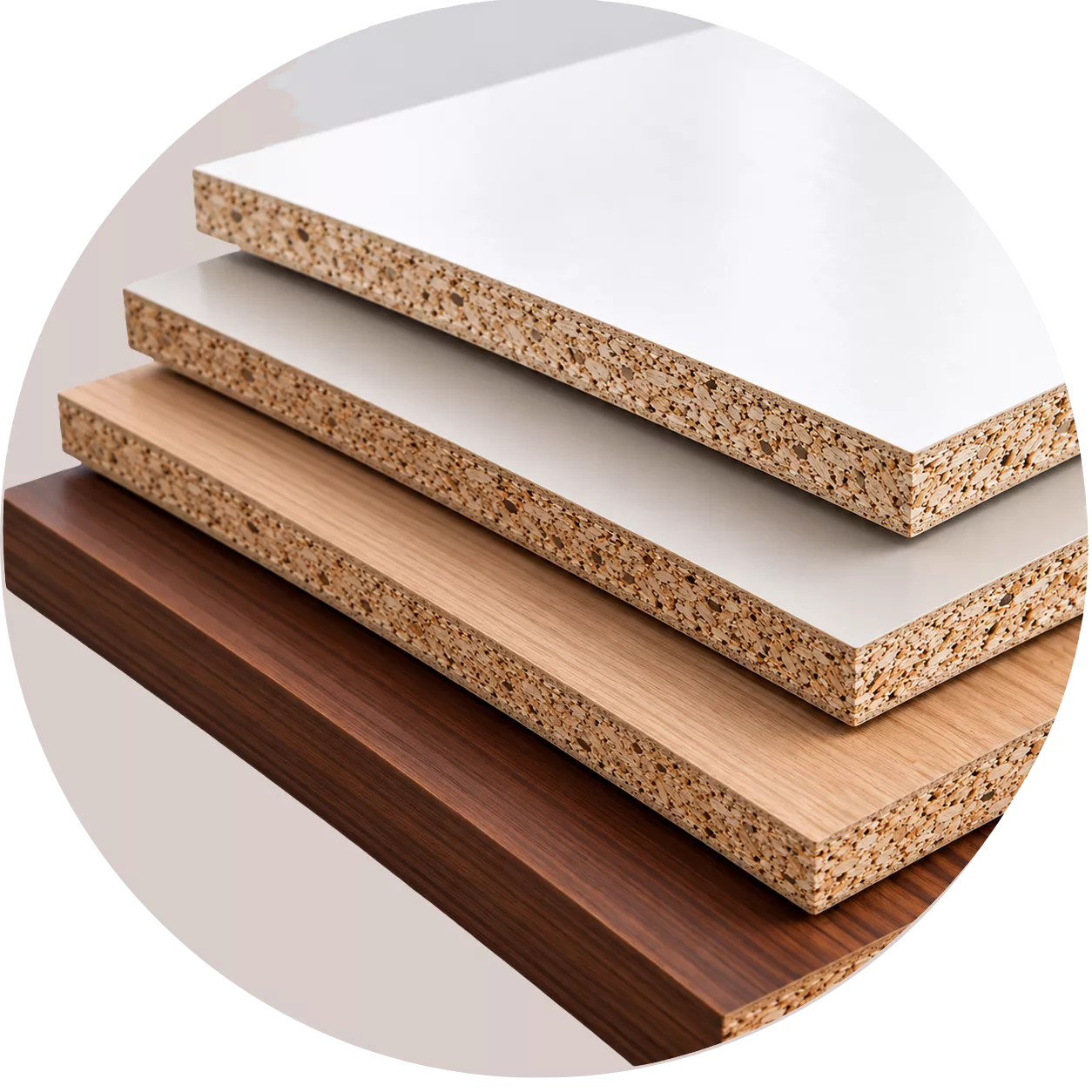
Decorative Paper

Resin - impregnated decorative paper.
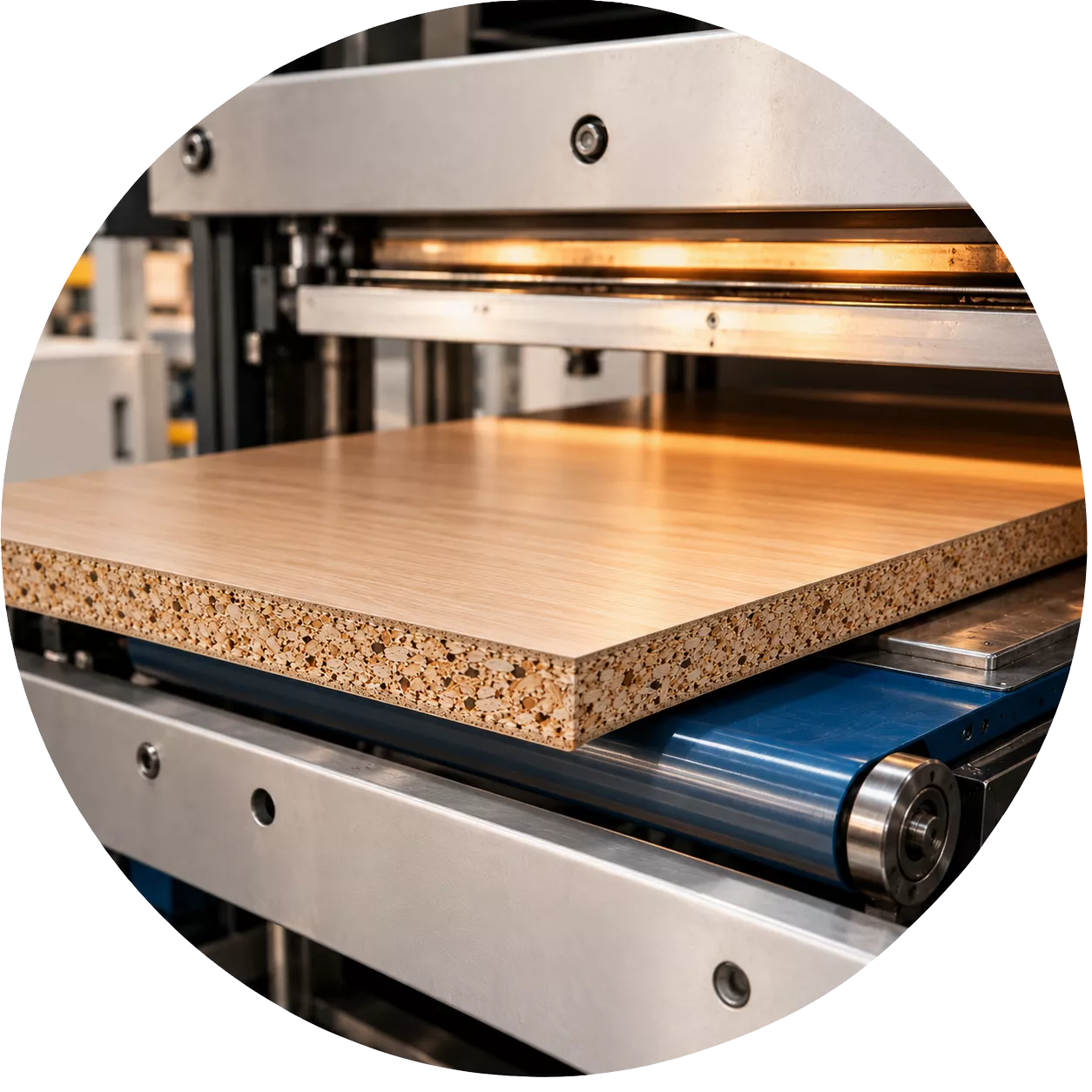
Heat & Pressure

Permanently pressed under controlled heat and pressure.
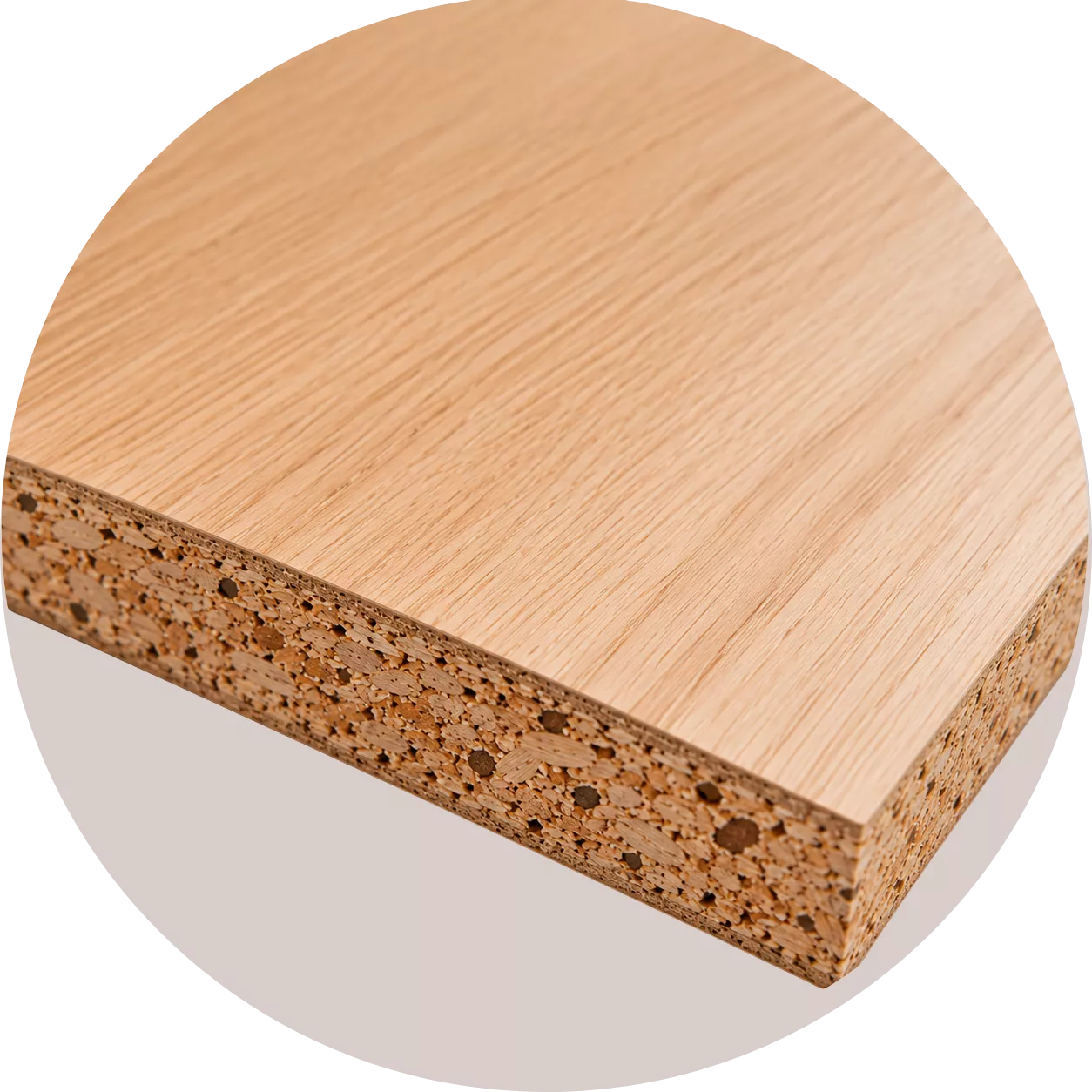
Prelaminated Panel

Finished board with durable decorative surface.
Key Features

Durable and
Aesthetic

The melamine surface is heat-and-pressure bonded, not glued after the fact, so it holds up to daily scratching, light impact, and household cleaning without lifting at the edges. You get the visual finish of laminate with a surface that's meaningfully tougher than paint or veneer alone

Wide Range of Applications

Because the board comes finished, it drops straight into modular furniture production — carcasses, shutters, partitions, panelling — cutting a step out of every job that would otherwise need on-site or in-workshop lamination.

Variety of
Finishes

From plain solids to wood-grain replicas to textured suede surfaces, the finish range is built to match whatever design brief you're working to, whether that's a minimal Scandinavian wardrobe or a warm walnut-effect kitchen shutter.

One-Side or Both-Side Lamination(OSL / BSL)

Boards are available laminated on a single face (OSL) — typically used where only one face is visible, like a shutter — or on both faces (BSL), used where both sides of a panel will be seen or where balanced construction is needed to prevent warping.

Range of Finishes

Xylosuisse’s prelaminated particle board is available across three broad finish families

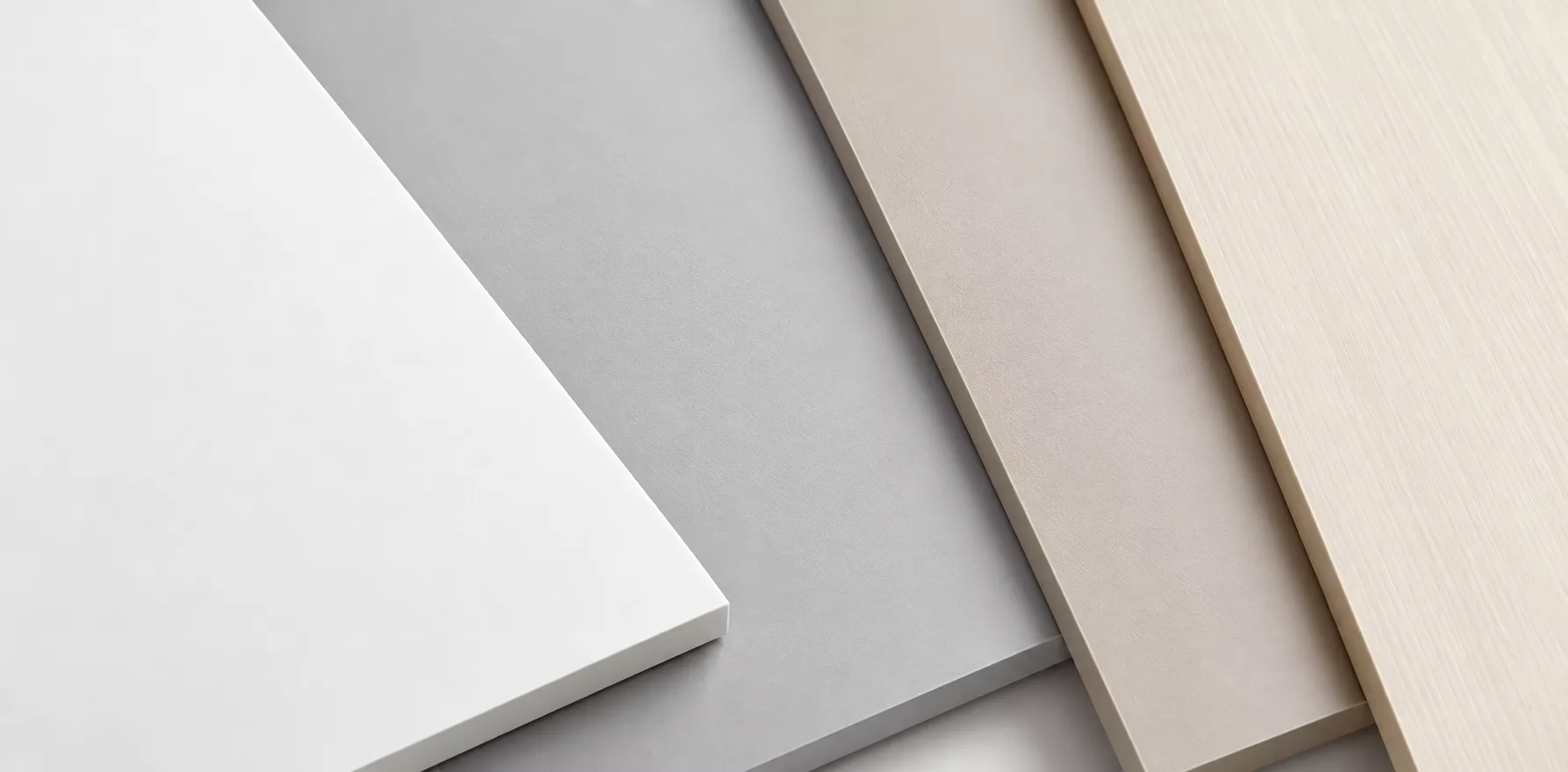
Plain Solids

Flat, uniform colour panels (whites, greys, pastels, deep tones) for a clean, contemporary look, especially popular for modular kitchen carcasses and office furniture where a neutral base is needed.
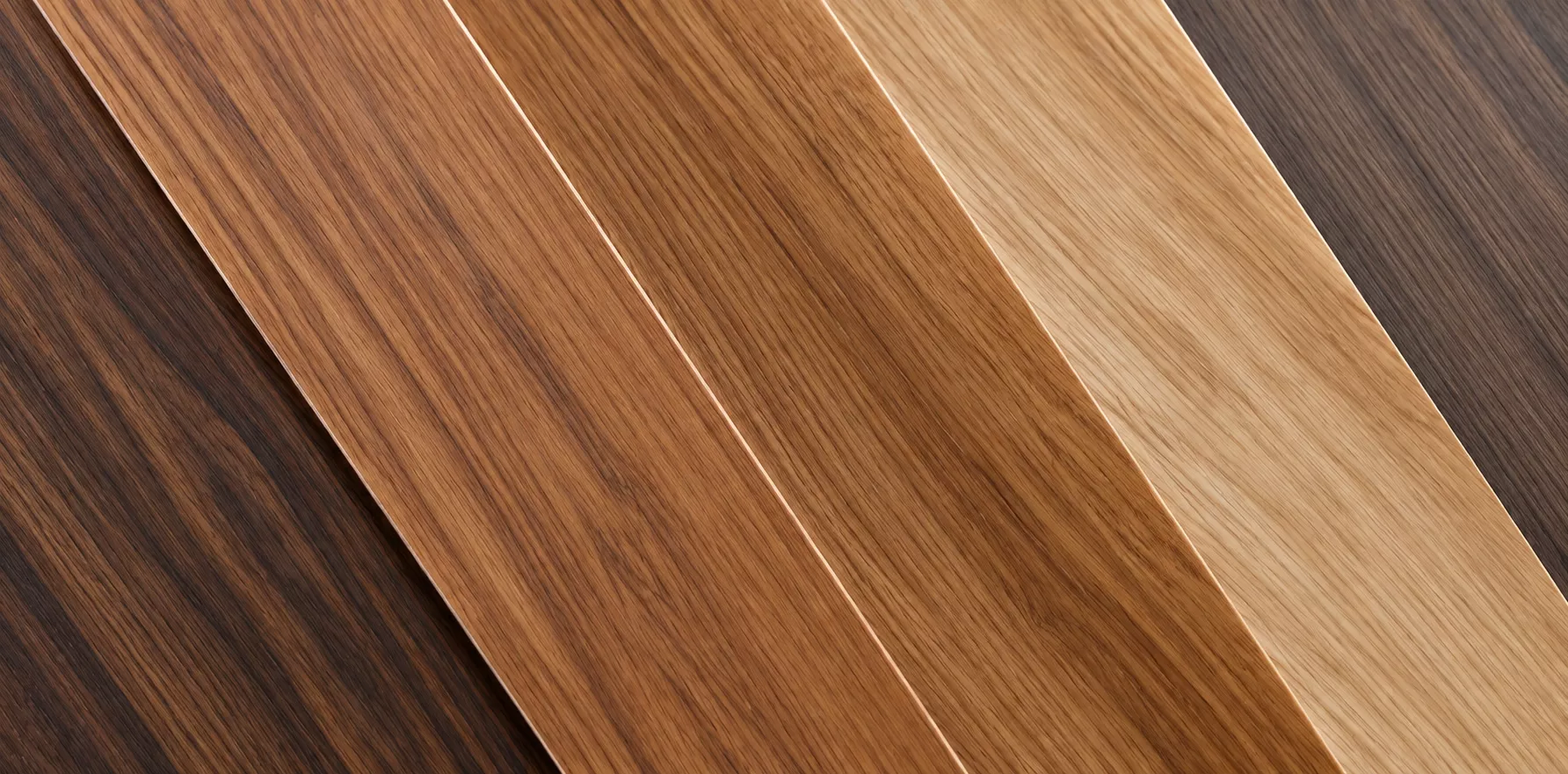
Wood Grain

Replicated oak, walnut, teak, and other natural wood textures, giving the warmth of solid wood at engineered-panel pricing and consistency.
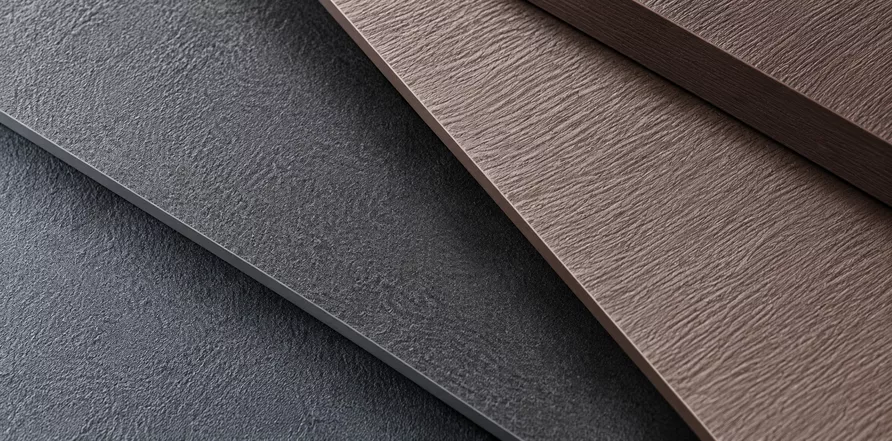
Textured & Suede

Matte, low-sheen surfaces with a tactile finish, increasingly specified for premium wardrobe interiors and feature panelling where fingerprint resistance and a soft-touch feel matter.
Applications

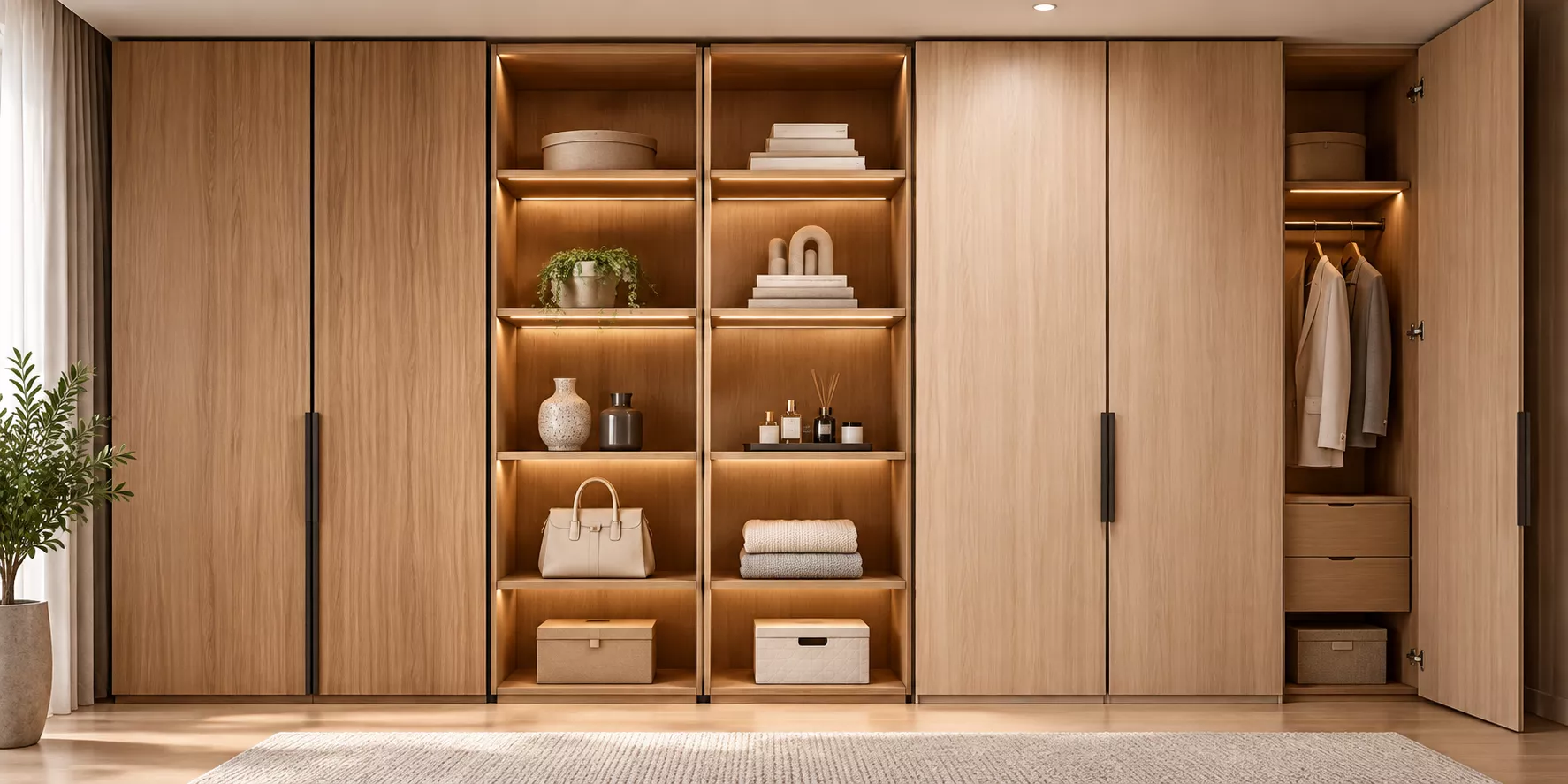
Wardrobes

Pre-laminated boards are ideal for wardrobes, offering a ready finish and secure screw holding.
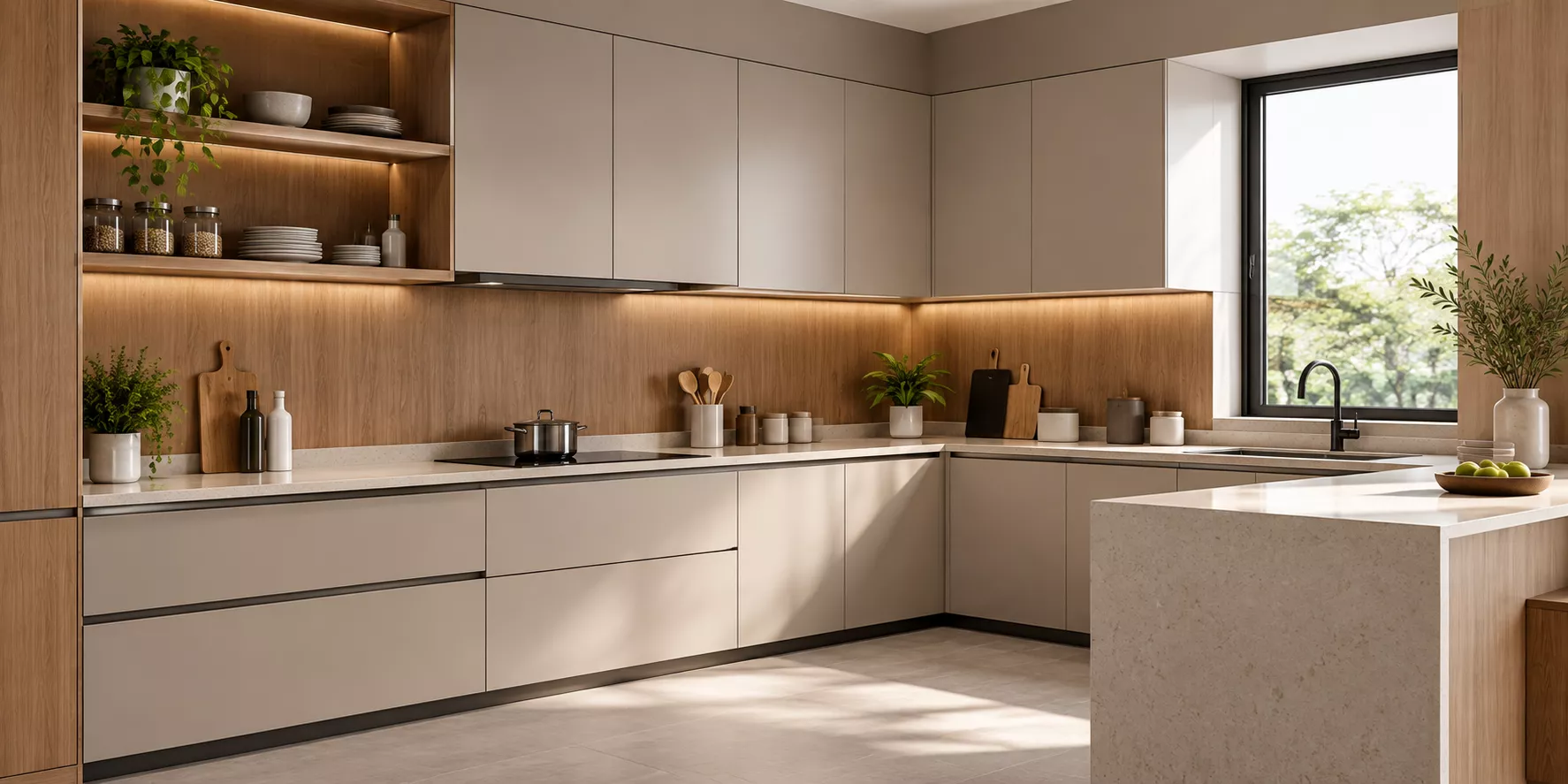
Modular Kitchens

Cabinet carcasses and, in Grade I/moisture-resistant specifications, some shutter applications
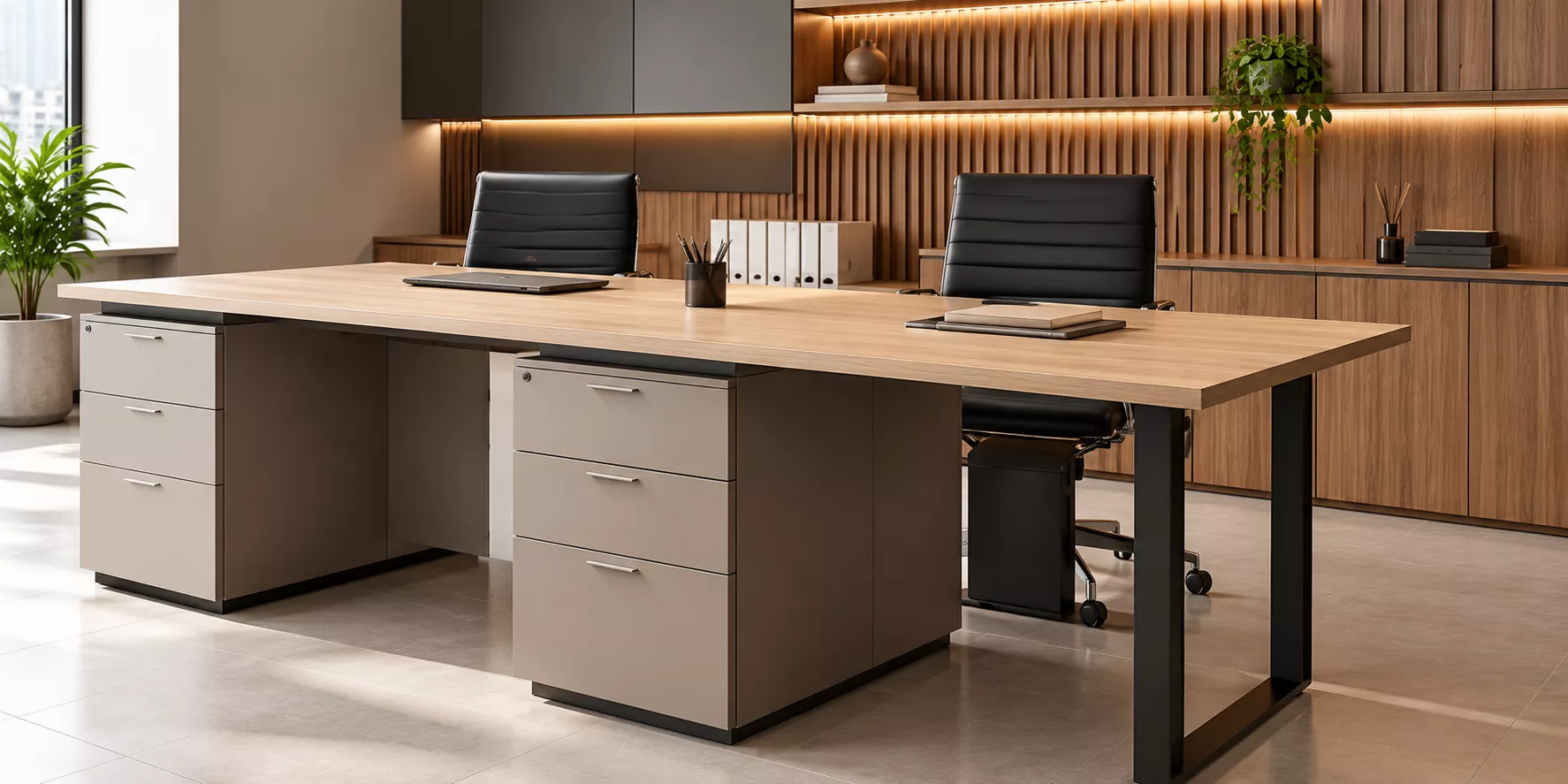
Office Furniture

Desks, workstation panels, storage units, and partitions, where consistent finish across large production runs matters.
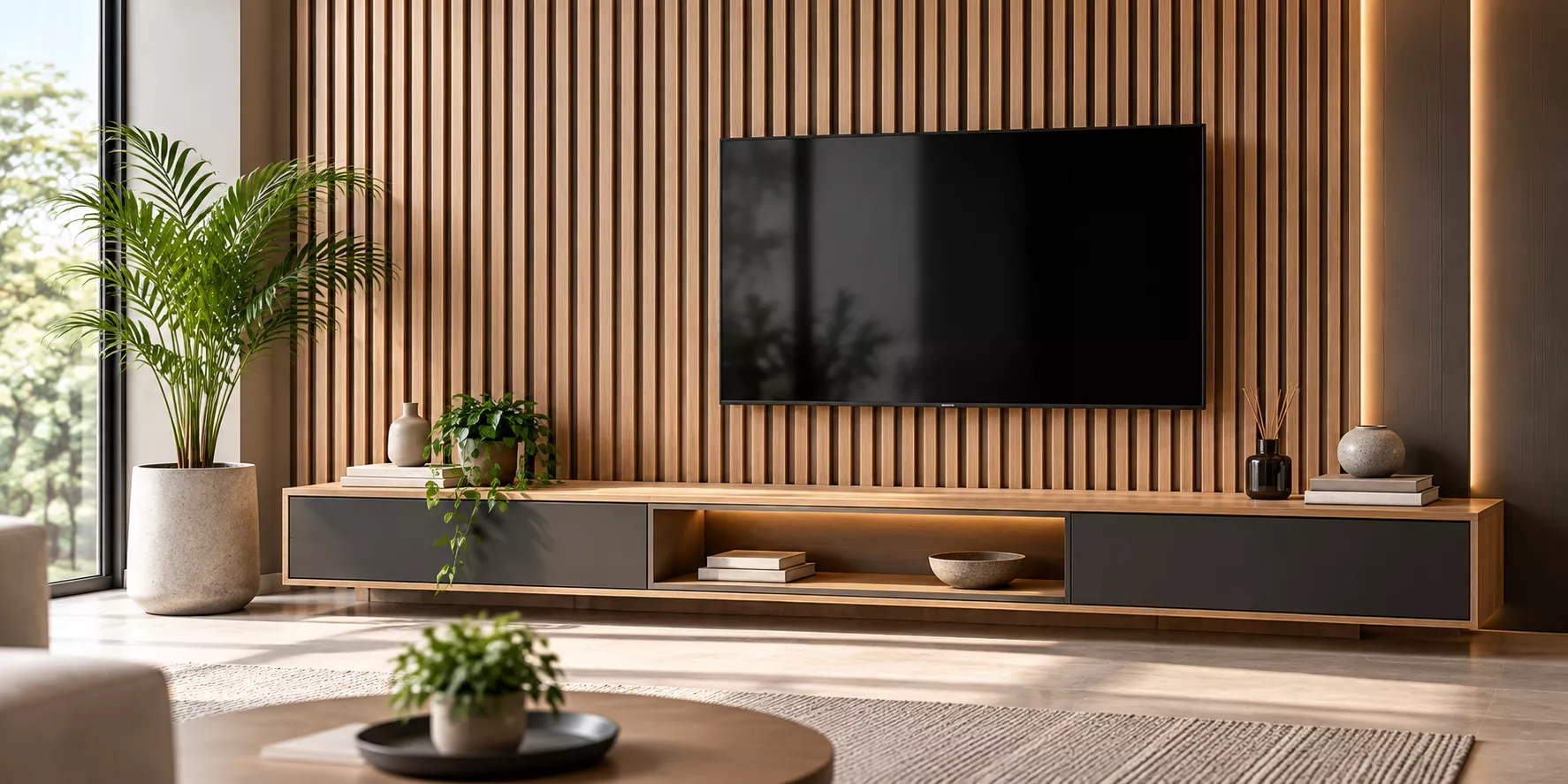
Wall Paneling

Decorative and acoustic wall panels in commercial and hospitality interiors.

Benefits Over Plain Board + Separate Laminate or Veneer

No Separate Lamination Step

The finish is already bonded at the factory. That’s one less process, one less contractor, and one less point where things can go wrong on-site.

Cost and Time Saving

Site-applied lamination adds labour cost, critically — time. For production runs (wardrobe manufacturers, modular kitchen fabricators), that adds up fast across hundreds of sheets

Consistent Finish, Every Sheet

Factory lamination under controlled heat and pressure gives you the same finish quality on sheet 1 and sheet 500. Hand-applied lamination varies with the applicator’s skill and site conditions.

Fewer Defects at the Edge

Factory-bonded laminate has better edge adhesion than laminate applied after the board has already been cut and handled.

Maintenance & Care

Clean with a Damp, Soft Cloth & Mild Detergent

Avoid abrasive scrubbers, which can dull the surface finish over time.

Keep it dry

Prelam board is moisture-resistant, not waterproof — wipe up spills promptly, especially near sinks and kitchen wet zones, and avoid prolonged water contact at joints and edges

Use edge-banding on all cut edges

Factory lamination protects the face of the board; exposed cut edges are the most vulnerable point for moisture ingress, so ensure every cut edge is properly banded during fabrication.

Avoid direct, prolonged heat sources

uninsulated stove backs, direct sunlight through glass close to panels, which can affect the laminate bond over the long term.

Frequently Asked Questions

Plain particle board is the unfinished engineered wood core — wood particles bonded with resin under heat and pressure — with no decorative surface. Prelaminated particle board is that same core with a decorative, resin-impregnated laminate (usually melamine) permanently pressed onto one or both faces at the factory, so it arrives finished and ready to fabricate, with no separate laminating step required

No — prelaminated particle board is moisture-resistant, not waterproof. The factory-bonded laminate surface resists everyday spills and humidity well, but the board is not rated for constant water exposure or submersion. For high-moisture zones (directly under sinks, bathroom-adjacent units), a moisture-resistant (MR) or HMR-grade board with properly sealed edges is recommended, and boards should never be treated as suitable for exterior or wet-area use

Prelaminated particle board sheet price varies by thickness (commonly 9mm, 12mm, 18mm, and 25mm), finish type (plain solids are typically the most economical; textured/suede and premium wood-grain finishes cost more), and whether the board is laminated on one side (OSL) or both sides (BSL). As a general guide, prices move with raw material and resin costs industry-wide, so request a current quote for your specific thickness, finish, and order volume — contact Xylosuisse for sheet-wise pricing and bulk order rates.

Look for manufacturers who test to IS 12823 (the Indian Standard for pre-laminated particle board), publish clear grade and lamination-type (OSL/BSL) specifications, and can show consistent finish quality across production batches — not just a single sample sheet. Manufacturing scale, machinery source, and years in the wood-panel industry are good proxies for consistency at volume

Both are used for wardrobes; the right choice depends on the application. Prelaminated particle board is a cost-effective, widely used choice for wardrobe shutters and carcasses in standard residential use. MDF (medium-density fibreboard) has a denser, more uniform core, which gives it an edge for detailed edge profiling, routing, and higher-moisture-tolerant applications. If your wardrobe design needs intricate shutter detailing, ask about our MDF range alongside prelam board.

Need Help?
Scroll to Top